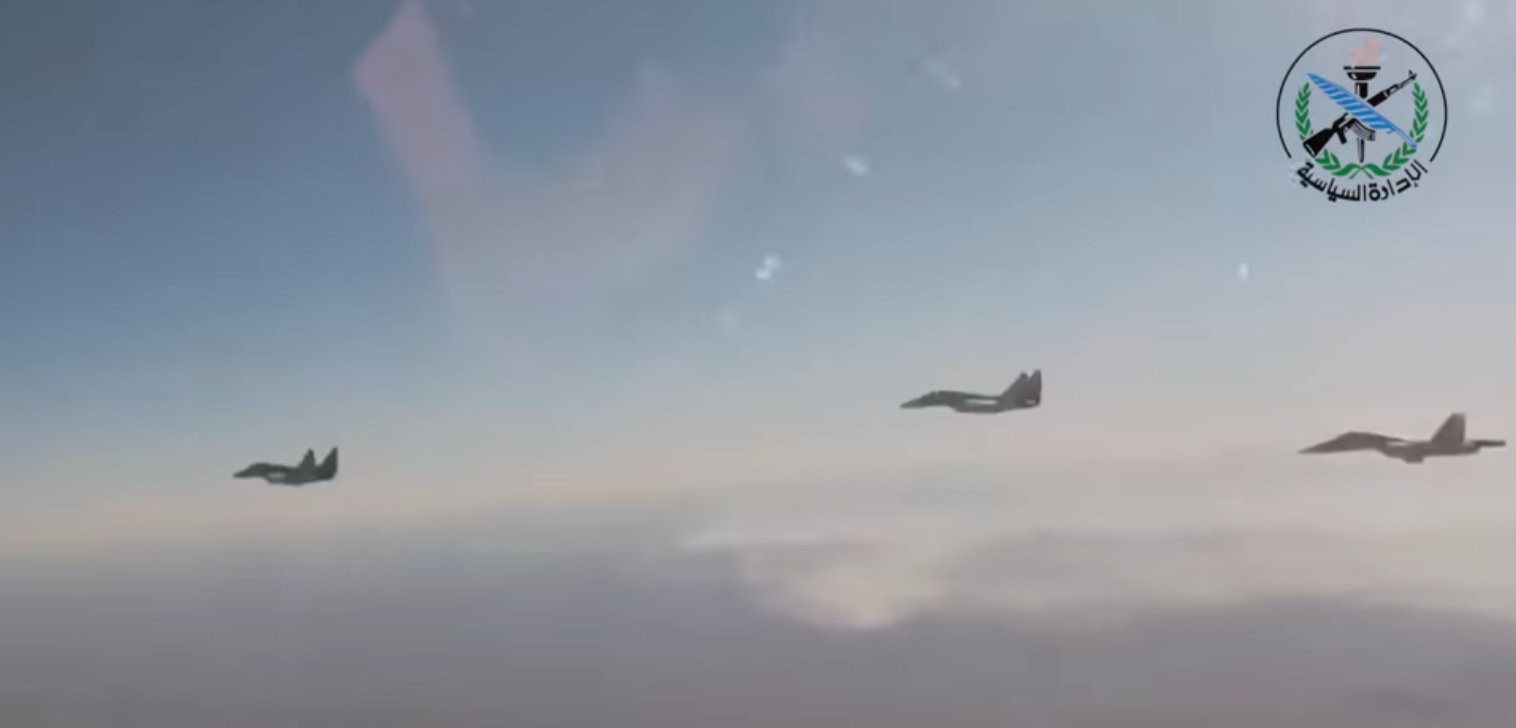
A former Romanian MiG-29 pilot has kindly accepted an interview for my blog. V. flew in MiG-21 and MiG-23 before moving on to the MiG-29, and participated in the LanceR and Sniper upgrade projects. I would like to thank him here for his time.
1) Hello V., many thanks for accepting an interview with alejandro-8en.blogspot.com. Could you provide an introduction to your service in the Romanian Air Force?
Very briefly I started my activity in the RoAF in 1978 as a student of Air Force Academy ( at that time S Of Av- Air Force Officer School) graduated as fighter pilot in 1982 and retired from the Air Force in 2000. In my career during the RoAF I flew MiG 21 M , MiG 23 MF, MiG 21 LanceR and last 10 years the MiG 29 A. Also in the last years of activity I was involved in the 2 upgrades programme of the RoAF – LanceR for MiG 21 and Sniper for MiG 29.
2) Did you get trained in the Soviet Union before flying the MiG-29? If so, how did you find the training?
No I was not trained in USSR I was part of the first group of pilots that transit on 29 in Romania at the end of 1989 and beginning of 1990. Our teachers were our pilot colleagues that transit in USSR in the Autumn of 1989.
3) What was your first impression of the MiG-29? What were the main advantages when compared to previous generation fighters in Romania?
Up to MiG29 I was trained on the MiG 21 and MiG 23. Compared with those 2 aircraft this one was an advance aircraft. First and most important thing was the small to none restrictions regarded the engines , airframe etc. First good impression I took was the cockpit that was not painted in that green as in 21 & 23 and the generous space from inside the cockpit. The instruments were grouped much more convenient and easy to reach , the HUD was impressive and the Caution panels were all gathered together . I was more than pleased to see this “ revolution ” in the cockpit. Than during first flights I realized other advantages like good and easy handling characteristics in any of the situation of flight ( it was like a glider when you came to land) , good acceleration ( from Idle to Military or from Idle to Full Afterburner ), impressive thrust/ weight ratio compared with previous fighters, extremely good visibility from inside the cockpit, very different armament philosophy and weapon system and many more.
4) What do you think were the strong and weak points of the MiG-29?
At the level of 1990 the strong points were the thrust/weight ratio used for engagements, the IR missile – R73, the good radar N019 and it`s mode of operation, the small rate of turn & radius, the SLEM ( the monocle on the helmet for guiding the IR missiles) and easy operation of the modes & submodes of the weapon system. The weak points were short flight range & distance, not so accurate navigation system, big fuel consumption
5) One of the issues with early MiG-29s was the lack of TWS in the radar (Track while scan mode). This meant that you lost situational awareness when launching a radar guided missile (R-27R). Can you confirm this? Was there any technique or equipment that could mitigate this problem?
Yes you are right. But coming from old fighters 21& 23 this one was much more advanced for us. And the mode of operations of the radar were not so advance to have RWS /TWS or others. We only had STT after lock-on. Very simple. As you probably know we relly on the GCI for all of our missions doesn`t matter if it is a high altitude intercept using the radar or low intercept using our IRST -KOLS till the moment we “ see” the target we were guided from the ground . The term SA wasn`t part of our terminology and we don`t aware about it. And the way we were trained was completely unrealistic. We use the aircraft mainly for interceptions at all altitudes and for these types of engagements the aircraft was more than good.
6) Could you describe the N019 operating modes? Did you combine modes with wingmen to be more effective?
The radar modes were : head-on, pursuit, automat and dog fight and the scales on the HUD for them changed accordingly – 150 , 50 , 100 and 10 km. We doesn`t developed specific way to use combined modes with wingmen because the radar wasn`t so advanced ( as I noticed later
7) The N019 radar had good range characteristics. At what maximum distance you could detect a fighter? Was there much difference between MiG-29, MiG-23 or MiG-21 due to different radar cross section (or any other fighter)?
Well there are many things to say about it. I`m not sure that the good range were so good….but compare with previous obsolete radars used in 21 & 23 ( RP21 & SAFIR ) this one was far better in terms of acquisition/lock-on ranges. I remembered a sortie above the see ( were the noise is much bigger than above the land and the discovery range should be affected by the sea waves ) head-on at an altitude of 11000 m when I discovered the target , another MiG 29 at approximately 80 km. In the book it is written that the maximum acquisition distance at this altitude could be around 70 km… but above the sea this distance is reduced by 10-15% . Normal discovery ranges at high altitudes were 40-60 km and at low altitudes (below 3000 m ) were 30-40 km ( head -on) .In pursuit mode these figures drop to 25 – 40 km respectively 20-30 km bellow 3000 m . Compared with MiG23 armed with R23 the acquisition & lock on were almost the same. Compared to 21 it was completely different from the head-on hemisphere, to the presentation mode on the HUD to the end of the mission which on 29 and only on it was almost always done in tracking mode with simulated firing of the on-board gun after the intercept. Evan when we use like “targets” the 23 the situation was almost the same. We never used ( at least till I was in the RoAF) like targets the 21 because we don`t have it in our Base inventory. But I remembered that at least once I was target for the guys from Borcea Air Base who that year were preparing for a real firing at heights of over 14,000 metres (which, between you and me, was not at all realistic).

8) MiG-29 9.12A are known to have a short range. Did you find it enough for Romania’s air space?
Yes or no. It depends.
We have been deployed a few times to another airfield to do live firing in other air-to-ground range but not so far from MK (nickname 57th Air Base). No more than 150 km maximum. From there we had to find the range somewhere further east about 80 km from the take-off site. For this simple exercise gas was enough. But in combat conditions under the pressure of the situation and the air reality plus the quality of the GCI's guidance I think we would have looked more often at the fuel gauge. And let's not forget that on the manual the aircraft is declared as a front fighter.
In the internal tanks we could take around 4300 liters of fuel or 5800 liters with external tank ( 1500 liters, one single tank placed between the 2 engines under the belly and in this situation until the tank was jettison we could not use the gun!!).
9) At what distances you could engage objectives with the R-27R? Was the procedure more simple than in the MiG-23MF with R-23?
Nothing was like in the manual….where the lock-on distance was 40 km. In reality the distance ( head-on ) could be even greater let`s say more than 50 km for firing it. But as you know there are plenty of factors that could dictate these figures. And as I told you before .The procedure is almost the same at 23 because both missiles are SARH . You have to illuminate the target till the impact moment or you loose it. Not so safety in nowadays.
10) How useful did you find the IRST? At what sort of distances could you engage targets? Was it very dependent on weather conditions?
I use to have something similar but not so advanced at 23 but I rather rare used it because wasn`t so good.
This “new” IRST model consisted of 2 parts in the same enclosure. A sensor that "senses" the heat emitted by the engine and a laser rangefinder that gives you the distance to the target. In the manual it is written that it is effective on a target with a RCS=3 m² starting with 15 km and maximum presentation angle 3/4 from behind but in reality the discovery distance was less then 10 km and it depends on many factors. And yes it depends on the weather (and not only ). I remembered a low altitude night intercept ( 200-500 m ) using only passive acquisition system above the land in north of Dobrogea ( area where we was located ) in a late autumn when the paysans put fire on the vegetation on the ground and my target flew above these millions of false targets .Because it was almost impossible to discriminate between so many targets I asked my fellow to engage afterburner in order to see him….
11) Soviet and Warsaw Pact air forces used a Lazur GCI system to assist in intercepting objectives. Did you ever use it? How useful did you find it if so? Did it improve the situation awareness?
Starting with MiG21 we had on bord the LAZUR . At Mig21 I never used it in 23 it was supposed to used it 2 times but the system failed both times and wasn`t at all reliable. Actually the LAZUR system was packed in , if I remembered well, 7 or 8 trailers and rarely it happens all of this to be functional. But after ` 90 Romanian develop our own system if I remembered well named C802 and I used it several times and it worked perfect and of course was only 1 or 2 trailers. It is difficult to asses if this improved the SA or not ( more than that at that time we didn`t know what SA means).The system worked guided by a ground navigator and all the symbols and signs appear on the HUD making interception relatively easy. But if you didn't “see” the target, things got complicated…
12) Early RD-33 engine variants are famous because they are smoky. Did you find this to be a disadvantage when operating the Fulcrum?
Not really for peace time. But in a war during a real fight I guess this can be very dangerous. All you have to do is to see the trail smoke and you know where the enemy is….
13) How many hours did you fly per year in the MiG-29? Was it complemented with flights on the L-39 or other trainers?
We flew relatively less than 50 hours a year after a training course that was "borrowed" from the Russians and was not the most convenient for us. At one point the spare parts situation forced the command to make innovations so that we could keep our flight training. This led to the situation of completing flights on the L-39 aircraft.
For me it was a little better than for my colleagues left in the regiment. I had to requalify on the MiG21 in order to participate in its upgrade program. During this time I was also doing theoretical training for the first series of pilots who were going to switch to the upgraded 21.
 |
| MiG-29UB. |
For the remaining MiG29 pilots, a program was developed to maintain flight training using the much larger flying resource of L-39 aircraft in the school. So they had to move from the regiment to Boboc (where the student planes were) and fly there. The situation with spare parts began to become troublesome and we were approaching the impossibility of using the planes because the Russians, seeing our westward orientation, did not deliver the orders placed to complete our stocks of spare parts. Slowly the planes began to suffer from the lack of spare parts and one by one they were grounded. To this was added the complete lack of vision of some Air Force commanders who did not know how to manage this situation differently. It was possible to use another source of supply at that time, namely from the Ukrainians who also operated this aircraft (slightly improved version 9-13) but who had the necessary experience in their factories to provide us with something. It was a period full of internal strife in which the pilots of the 29 felt betrayed by those who were supposed to ensure their continued training. The accession to NATO changed even more the perspective of the country and the lack of professionalism of those in charge hastened even more the "death" of this plane.
Looking back I'm not very happy with how our bosses handled the situation with a relatively new aircraft that was heading for certain "death".
14) Romania operated MiG-29s when Soviet Union collapsed, were there any issues with technical support/spare parts in those years?
As already explained in the previous question the stocks in the "pharmacies" of the new planes were slowly running out and although there were responsible people in the regiment who tried to keep this under control most of the time the higher echelon did not bother to help us much. It was beyond us to do anything but complain. After 2000 (the year I retired from aviation) the situation started to become critical and one by one the planes stopped flying due to lack of spare parts. The agony lasted 2-3 years after which the last survivor had to remain on the ground. Sad. This only proves the poor commitment of the military-political leadership to properly manage the defence capability of the country.
 |
| Low pass at Borcea airbase.. |
15) In the 1990s Aerostar, Elbit (Israel) y DASA (Germany) developed the MiG-29 Sniper. What were the main advantages when compared to the 9.12A version?
I know a lot about this subject. When I participated in the MiG 21 avionics upgrade I realized how powerful a 29 could be with a custom avionics. And slowly, slowly, I worked with other pilots and engineers to put together an operational specification of how we wanted this aircraft to be and how it would meet the demands of modern warfare. Thus the Sniper was born. The first thing we wanted was to increase the flying time and range which would be done in the same style as Germany had done while they had the aircraft in their inventory. That is, we added to the aircraft's fuel system two additional tanks under the planes. Let's not forget that Germany after reunification kept this aircraft in its inventory until the Eurofighter appeared and more than that together with the MiG factory they brought the aircraft through a modernization program to NATO standards. Then we really started to replace everything in terms of avionics from the 1553B serial bus multi modular computer to the cockpit architecture that looks exactly like a multirole fighter should look like. And here we have put the dot on the "i" because it is known that the version flown by us and those that appeared later, i.e. 9-13, were not multirole aircraft. Or the concept of fighting a modern war obliges the participants to have such aircraft in their arsenal and to be able to change the mission in flight at any time by switching from air-to-air to air-to-ground or reconnaissance, SEAD, etc.

In 2000 Aerostar, Elbit and DASA Aerospace started the Sniper modernization program and in a very short time completed a mock-up that was not fully functional but at least in the cockpit was already a different aircraft. The same Jewish pilot that I trained in 1995 to fly the 21 I trained now for the 29 and this man has proved to be a great pilot and he has shown the qualities of the "new" planes that he flew and showed to those present. In the operational specification we focused on precision navigation ( we added an inertial navigation system based on laser gyroscopes and we would also have integrated a GPS receiver), correct identification, advanced frequency hopping radio communication systems, high performance radar warning receiver, a glass cockpit, HOTAS, etc. and we were thinking how to change the radar and integrate active guided air-to-air missiles as well as intelligent air-to-ground munitions and much more... If this program had come to life the aircraft would have become a formidable multirole aircraft increasing its value several times over- but it was not to be.
16) Was there any extra equipment considered (radar)? Perhaps later on if acquired?
The proposal was for the radar to be Pulse Doppler, all aspect, look-down shoot-down capabilities one like ELTA ELM 2032 fire control radar or better.
17) Why do you think it was not acquired by Romanian Ministry of Defence? Were there any potential issues with RSK MiG not supplying spares?
The biggest mistake was that we did not know how to manage the advantages given by this aircraft in close air combat. Our bosses were afraid of something happening but aviation by excellence is a dangerous craft. It's all about knowing how to educate pilots so that they don't look for the sensational elsewhere...The commanders who should have taken advantage of the “ youth” of this plane (don't forget that we got it at the end of 1989) and thought of solutions to exploit its potential and after the former USSR disappeared they indulged in aviation games...The transition to the West with the entry into NATO should not have ended the career of this plane so early. The sad thing is that even now I am not sure that what the Romanian Air Force is doing is the right thing. In the past the commanders ( with small exceptions ) did not think globally and in perspective...they just used to not register with serious problems.... totally unproductive for an aviation. According to the agreement with Elbit we were supposed to upgrade 6 MiG29 aircraft which would surely have made this aircraft the most feared MiG29...exactly what the MiG 21 LanceR was after modernization....
 |
| Sniper cockpit. |
I think the real reason was that there was no one left to fight for it in the Air Force and the budget allocated for this modernization was never known . Simply after a lot of effort and money spent to bring a functional mock up to flying condition someone decided it was no longer worth the effort....Whether it was the right choice or not we will never know.
18) What was your most challenging sortie in the MiG-29?
Perhaps not one, but several missions stick in my mind, the first being a deployment exercise at the Boboc Aviation Academy airfield at the beginning of the student flying year in 1992. We were a formation of 12 aircraft, and visibility was below critical.....luckily we had our people on the approach system who guided us well on course...otherwise we would have turned around and left the students with a bad taste.... Then there is another exercise done I think in 1993 when a formation of 12 aircraft ( 6 29 aircraft and 6 23 aircraft ) we were invited to fly in parade formation on the 100th anniversary of the Military Academy....The man directing us vertically was the flight deputy and he was perched on a block of flats. The misfortune was that the one who was reading the introductory word got the sheets he was reading mixed up and from about 2 km away the one on the block told us to make a 360° turn there over Bucharest with the formation....And from that moment the madness started...Being above in the last formation I saw how desperate they were trying to keep the formation . And during this 360° turn the radio controller on the roof of the block suddenly tells us now come back to me ...And that wasn't the end of the story...My wingman on the right declares that on the warning panel "Engine vibration" lit up ...that means he had to put one of the throttles at idle and if the lamp goes out leave the engine on this mode and fly the rest of the mission with only one engine...and we were 200 km from MK base ....
19) Is there any anecdote you would like to share before finishing the interview?
I'm not sure I know that. But as an anecdote you might take it when one of my engines shut-down during a high altitude intercept at 14,500 m...and I asked the flight controller for permission to continue flying...the aircraft was 67 red...which later became Sniper....
Finally, let me thank you for bringing back almost many fond memories .....
Other interviews:
I am always looking for more
veterans, active members or people related with the defence industry to
accept interviews. If you enjoyed reading the material and would be
happy to accept an anonimous interview you can get in contact with me.
My e-mail can be found in this link at the heading. Otherwise leave a
message in the comment sections.
- Interview with a former M60 tanker
- Interview with a former Pakistani Army Type-59 tanker
- Interview with a former Leopard 1 tank commander in the Army of Canada
- Interview with a former Merkava tanker
- Interview with a former M60A1 tanker
- Interview with a former M60/Abrams tanker
- Interview with a former Olifant tanker
- Interview with a former Chieftain tanker
- Interview with a former M551 Sheridan driver
- Interview with a former Centurion tank driver in the Army of Sweden
- Interview with a former Centurion tanker in the Army of Denmark
- Interview with a USAF pilot who flew the F-106 Delta Dart
- Interview with an US Army M48A5/M60A1 veteran tanker
- Interview with a former British artilleryman and veteran of the Gulf War
- Former M60 tanker in the Army of Austria
- Former Chieftain crew member
- Former Chieftain gunner
- AMX30 commander of the Army of France
- NCO of the Army of Serbia
- Former crew member of Challenger 2
- Former Leclerc commander
- T-72 driver in Czech Army
- US Army M60 tank crewmman
- Interview with D., former US Army tanker with experience in the M60 and M1 Abrams
- Interview with Stefan Kotsch, former NVA/Bundeswehr tanker
- Interview with former Marine and writer Kenneth Estes