Showing posts with label M48/60 Patton. Show all posts

Saturday, 17 January 2026

Interview with a former M48 MOLF tanker in the Greek Army

A former M48 MOLF tanker in the Army of Greece kindly accepted an interview for the blog. This variant, which incorporated a FCS derived from the EMES-18 used in the Leopard-1A5 (and based itself on the EMES-15 in Leopard 2), is probably the most advanced for this type.

1. Hello T. Can you provide us a brief overview of your service in the Greek Army as a tank crew member? 


I had my military service as Second Lieutenant at 1995 till 1997 

2. What was your first impression of the M48A5 MOLF tank? What do you think were the strong and weak points?

The strong points was the firing Control System which was a modified LEO2 FCS with stabilisation , laser range finder and thermal imaging system.

Also the armour was good enough ( compare to LEO 1 for example)

Weak points was that only had 750 HP engine , it lacked side armour panels in the hull , and everything was analogue and old in the drivers compartment  

3. The Patton family has a reputation for being sturdy and very suitable for a conscript Army. What is your opinion on this?

Yes that is right,

4. Being from Greece, one has to take into account the different terrains, geography (islands, mountains…). Was there any terrain that was difficult to operate, or simply avoided when using tanks?

No


5. What was the typical distance to the target when firing? And the longest distance at which you ever fired?

Usually 2 km, but the firing control system was adequate up to 4 km 

6. What was the maximum rate of fire you achieved? Did it change noticeably when the different bins were used?

I only fired to 2 km 

7. What was the typical ammunition configuration load (% AP/HEAT/HE/other)?

60% APFSDS, 30% HEAT, 5%HESH,5% WP

8. Did you practice NBC scenarios? What was the procedure? How did it affect the crew performance?


No I havent

9. What is the maximum speed you reached? And reversing?


30 mph
reversing 5 mph

10. How different is the typical range you get countryside and in a motorway?

About 400 km in countryside and 500km in motorway 

11. When performing exercises, what was the maximum distance you covered in a day? Were there any issues with the maintenance of the tank?

100km , we lacked hatch sealing rings

12. The M48 is one of the largest (and most comfortable) tanks. Do you think it was worth it (it was also a larger target)?

Of course was worth it , comparing with soviet tanks was a larger target

13. What was the component that requires more maintenance/attention? 

The firing control system

14. Did you have the opportunity to train with other NATO Armies? What were your impressions? Did you like/dislike any specific equipment? 

No I didnt

16. More specifically, what about the Turkish, what was your impression on their tanks/training?


The Turkish Tanks at the time was inferior to the Greek Tanks , I don’t have idea about their training 

17. Did you receive any feedback on the M48 performance in different conflicts?

 Not really 
 
18. The M48 is still in service with some countries, and Turkey used them in Syria. Are you surprised by its longevity?

No not at all it is a good and rugged design 

Other interviews:

I am always looking for more veterans, active members or people related with the defence industry to accept interviews. If you enjoyed reading the material and would be happy to accept an anonimous interview you can get in contact with me. My e-mail can be found in this link at the heading. Otherwise leave a message in the comment sections.

Interview with a former Centurion driver in the Royal Netherlands Army
- Interview with 2 former LanceR pilots
- Interview with a former F-105 pilot and Vietnam veteran
- Interview with a veteran of the French Foreign Legion
- Interview with a former GCI/WPN controller in the French Air Force
- Interview with a Chieftain veteran
- Interview with a former Leopard 2A4 gunner in the German Army
- Interview with 2 Romanian MiG-23 pilots
- Interview with a former M48 commander in the National Guard of the US
- Interview with a former M-84 commander
- Interview with a former Merkava tanker
- Interview with a former Abrams tanker
- Interview with a former M60A2 "Starship" tanker
- Interview with a former Centurion tanker in the Army of Australia
- Interview with a former Type-59 tanker in the Army of Albania
- Interview with a former Leopard 2 tanker in the Army of the Netherlands
- Interview with a former Romanian MiG-29 pilot
- Interview with a former M60 tanker
- Interview with a former Pakistani Army Type-59 tanker
- Interview with a former Leopard 1 tank commander in the Army of Canada
- Interview with a former Merkava tanker
- Interview with a former M60A1 tanker
- Interview with a former M60/Abrams tanker
- Interview with a former Olifant tanker
- Interview with a former Challenger tanker
- Interview with a former M551 Sheridan driver
- Interview with a former Centurion tank driver in the Army of Sweden
- Interview with a former Centurion tanker in the Army of Denmark
- Interview with a USAF pilot who flew the F-106 Delta Dart
- Interview with an US Army M48A5/M60A1 veteran tanker
- Interview with a former British artilleryman and veteran of the Gulf War
- Former M60 tanker in the Army of Austria
- Former Chieftain crew member
- Former Chieftain gunner
- AMX30 commander of the Army of France
- NCO of the Army of Serbia 
- Former crew member of Challenger 2
Former Leclerc commander
T-72 driver in Czech Army  
- US Army M60 tank crewmman
- Interview with D., former US Army tanker with experience in the M60 and M1 Abrams
- Interview with Stefan Kotsch, former NVA/Bundeswehr tanker  
- Interview with former Marine and writer Kenneth Estes

Tuesday, 18 October 2022

Interview with a former M48 commander in the National Guard of the US

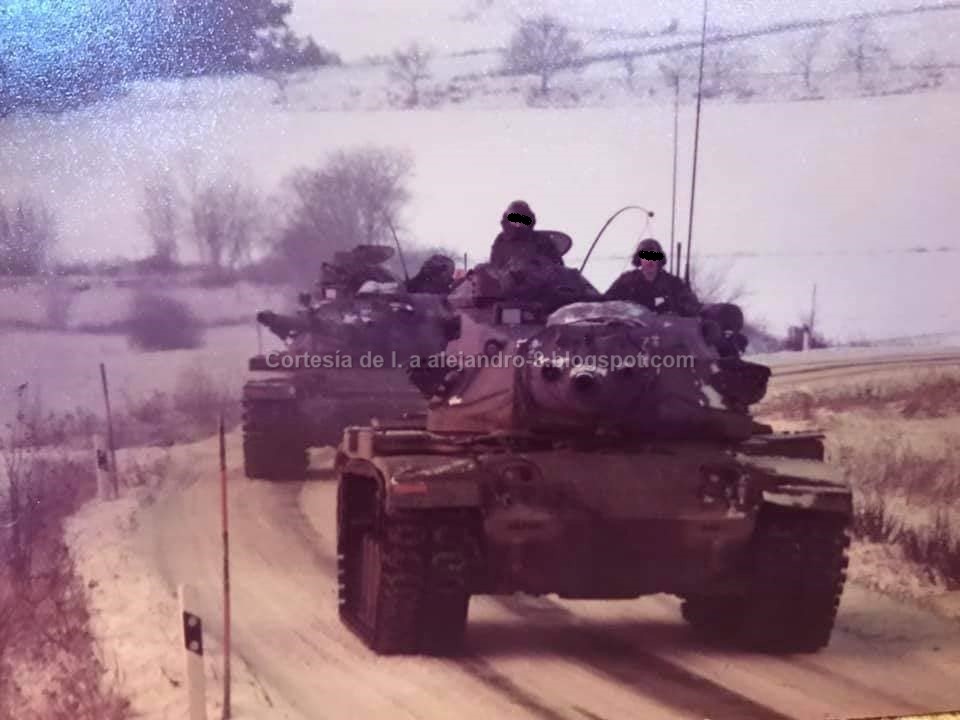
A M48 veteran kindly accepted an interview for the blog. G. served in a M48A1 in the National Guard. This variant still had the 90mm gun and petrol engine.

1. Hello G. Can you provide us a brief overview of your service in the US Army as a tank crewmember?

Trained at Fort Knox Ky as an armored crewman in the loader, driver, or gunner positions. Upon being assigned to my unit I found they were equipped with the M-48A1 Patton tanks instead of the M-60A1 tanks I was trained on. I went to a military academy for the first summer after attending armor school and missed out National Guard summer encampment. The second year I was listed as a loader on the unit roster. In formation, prior to boarding the bus to Fort Drum and 17 days of annual training, I was told I was going to be a tank driver. That was changed right away to make me a gunner. On the bus ride (8 hours+) my Psg came and sat with me and asked me many questions about my training and knowledge of tanks. He left momentarily and upon his return, he informed me I was now the tank commander of one of the tanks in his platoon. We had no platoon leader then. I remained a TC until I became the platoon sgt of the same platoon I had been in. As a side line, I instructed for the Tank Gunnery Assistance Team as a guest instructor teaching armor history and vehicle ID. I also became the training NCO (there was no training officer) for a time prior to becoming the Psg of the 3rd platoon.

2. What was your first impression of the M48A1 tank? What do you think were the strong and weak points?

The tank was fast for it’s day but my tank was slightly younger then I was. It was built in 1955 here in Delaware, so it was outdated. The machine gun in the turret was WW2 model coaxal M-1919 Browning converted to fire 7.62mm Nato rounds from the old .30-06 ammo used in WW2. The tank blew jets of fire out of the exhaust and at night you could track a unit’s progress up a trail by the flames lighting up the column. The driver’s test I took the first week back did not prepare me for what was inside the driver’s compartment and the tester had to instruct me on how to start the tank. It did not have the simple master battery switch and push to start button the new tanks had. The oil system had a cooler that sucked air into the cooler to cool off the oil. Unfortunately, this was mounted inside the turret and sucked air through the turret into the cooler. This was no issue in the summer but in the colder months, it made the insides like an ice box with the air flow. The exhaust was good for cooking C Rations and stayed hot long after the tank engine shut down. The range finder that it had was unlike the M-60a1s (which we were not trained on) and the M-48A1 difficult to operate correctly (which we were not trained to do)

3. Early variants of M48 had a gasoline engine. In later models it was replaced by a diesel one providing more range. Can you comment on the engine? Did you find it reliable? Was the lack of range an issue? What about getting supplied with gasoline?

We had the A1 gas driven models until being issued A5 diesel models. We had tanker support and never had to wait for gas. The heaters inside worked off of gas and were prone to catching fire so they were never used. The flame gave us away at night but he diesel smoke as almost as bad, especially when 17 tanks were in a column.

4. What was the typical distance to the target when firing? And the longest distance at which you ever fired?

Usually between 1200 and 2000 yards. We were limited in distance by the ranges at Ft Drum. We could not shoot the main guns any where else, such as Fort Dix. Every other year our encampment was devoted to gunnery and we would stay in the field the entire first week shooting and humping ammo.

5. M48A1 had a M12 stereoscopic rangefinder. Could you comment on its use? Did you find it useful or you would have preferred to fire at battlesight ranges?

I had no training on the range finder. I had no cross training on the M-48A1 at all except the driver’s compartment when I got my M-48-A1 driving licence. Of course I played with it and learned how to “Fly-the-Geese” using the knob on the range wheel, but we did not use it that I was aware of. We used “Burst on Target” (BOT) to fire and adjust if you missed. I was fortunate that I could set up my main gun very well to hit what we aimed at using the binoculars and string method. Our range time was spent firing at usually 2000 yards although we did once shoot 1200 and out to 2000.

6. What was the maximum rate of fire you achieved? Did it change noticeably when the different bins were used?

We were never permitted to rapid fire on the range. Too many officers thought it a waste of ammo. We also did not practice platoon fire drills.

7. What was the typical ammunition configuration load (% AP/HEAT/HE/other)?

In the 90mm we usually fire HEAT TPT Training practice-tracer. When we got the M48A5s we fired only service SABOT. First time I ever fired SABOT.

8. Did you practice NBC scenarios? What was the procedure? How did it affect the crew performance?

I was “appointed” the NBC NCO. They did not let me go to school as it would have taken me out of the tank during field training or gunnery. As a result, no NBC was ever practiced except for one night when the Bn XO drove around in a jeep throwing tear gas grenades on the back deck of parked tanks late one night. I watched one of the most violent fights ever when two crewman fought over one gas mask. The rest of us had ours on the lag bags. Two men, gunner and loader fought over the main gun trying to get the mask underneath. Funny thing was one of those two had his mask on his leg too so he didn’t need it.

9. What is the maximum speed you reached? And reversing?

About 25-and maybe 30 is level ground and no load. Too hard to stop fast at high (25mph) speeds on the roads. Never allowed my crew to back up without ground guide so we were limited to the ability of the ground guide to walk in front or rear.


10. How different is the typical range you get countryside and in a motorway?

Well, of course you got less in mountainous country where we \trained in the summer. On road marches at home was blacktop roads so it was much better.

11. When performing exercises, what was the maximum distance you covered in a day? Were there any issues with the maintenance of the tank?


We left the cantonment area at say, Fort Drum, and drove out on Antwerp Tank Trail about 10-15 miles. From there we would assemble and then start tactical. If gunnery was the goal we would administratively road march the entire way to the ranges.

12. How was the night firing conducted (Did you use flares or projectors)?

We had search lights on many of our tanks. Never fired under flares but supported another company who was firing under flares with our searchlight as a back up.

13. The M48 is one of the largest (and most comfortable) tanks. Do you think it was worth it (it was also a larger target)?

Nice and roomy turret but no real good places to lay down! The back deck of the A1s were great as a hot plate. The back decks of the A3s with the diesel engines were great to sleep on in the high elevations of the mountains we camped in as the deck stayed warm from the engine. Nine feet tall and shiny green with a huge white star in the canter of the turret sides was not my idea of the perfect war machine!

14. What was the component that requires more maintenance/attention?

Oil and the oil coolers. Some crewmen sabotaged oil coolers by putting field jackets in the cooler intakes and caused the cooler to overheat and blow. The sign was a large oil cloud behind the tank. This would side line the crew for the day or two.

15. Did you have the opportunity to train with other NATO Armies? What were your impressions? Did you like/dislike any specific equipment?

We were promised a trip to the Fulda Gap as that was where we were to go in time of war. Never got to go. Too expensive.

16. What about the Soviet Army/Warsaw Pact, what was your impression on their tanks? Was there any equipment you particularly liked/disliked?

They were the “great boogeyman”. “You guys have to kill 10 Commie tanks for every one of ours” was the mantra. Our tank was a 1950s design. Even the T-64 was much more developed then ours. The then top of the line T-72 was the hot tank of Europe. If we knew then how badly they were it would not have been so scary!

17. Did you receive any feedback on the M48 performance in different conflicts? What about future upgrades (105mm gun, diesel engine)?


Watched the Israelis use them and the Indians and Pakistan armies use them. They held their own until the Yon Kipper War when the Sagger AT missiles came out from Egypt.

18. During the Cold War the US Army would organise REFORGER exercises to deploy troops in Europe. Did you participate in one? How was your experience?

We were the poor step children of the US Army. Never got anything new. Korean War C Rations, WW2 ammo and machine guns. WW2 submachine guns and .45 caliber Colt pistols. Sleeping bags and wool uniforms M1950 style from Korea. They sure as heck would never send up on Reforger.

19. The M48 is still in service with some countries, and Turkey used them in Syria. Are you surprised by it's longevity?

No. Many countries still use them but the gun or fire control system, engines, and armor are upgraded. And they are camouflaged!

20. Is there any anecdote you would like to share before we finish the interview?


Being a NG tank company, we were in the middle of a small middle class town in NJ. They invited us to participate in the yearly Independence Day parade. AS a TC I was assigned to crew a tank we were taking to march in that parade. (We often ran two man crews, driver and TC on just movement or demos) As we drove in the parade at a slow rate of speed due to the bands etc in front of us we had to make a 90* right turn onto the main street. It was in the high 90degrees out that July 4 and as we turned the corner, the tank tracks pushed up the softened blacktop into ridges 12 inches high! Last parade were took a tank in.

We took a tank down to our CO’s shooting range about 30 miles south of our armory one weekend. Shot the machine guns and came back the same day. One the way home I was driving as I was the most experienced and trusted driver to navigate thru the narrow strets with parking on both sides. We had NJ State police as escorts in front and the rewar of our small convoy (1 tank and a could of 2.5 trucks with the company riding in them). On the way home it had gotten dark and as I appro\ached the stop sign from the country road to the double laned state road, a girl in a small Japanese car went flying past me. I could just make her out as the turret was facing backwards to keep the gun in travel lock and not poke anyone’s cars on the road ,so I was sitting in the driver’s seat with the seat all the way up. She got to the stop sign right in front of me between the police car and my tank. I hit the bakes and steered up a small rise along the road to keep from squashing her car not 50 feet in front of me. She had stopped without warning when she saw the sign and cops. As I sat in the now stopped tank, I watched the state police officer jump out of his patrol car and was so mad he was leaning into her car screaming at her and his feet with off the ground. I laughed about it later but was too scared right then. Closest I ever came to running a car over with a 54 ton tank. The guy acting TC above me was full of compliments about my driving but I was too scared to understand much of what he said.
 

Other interviews:

I am always looking for more veterans, active members or people related with the defence industry to accept interviews. If you enjoyed reading the material and would be happy to accept an anonimous interview you can get in contact with me. My e-mail can be found in this link at the heading. Otherwise leave a message in the comment sections.

- Interview with a former M-84 commander
- Interview with a former Merkava tanker
- Interview with a former Abrams tanker
- Interview with a former M60A2 "Starship" tanker
- Interview with a former Centurion tanker in the Army of Australia
- Interview with a former Type-59 tanker in the Army of Albania
- Interview with a former Leopard 2 tanker in the Army of the Netherlands
- Interview with a former Romanian MiG-29 pilot
- Interview with a former M60 tanker
- Interview with a former Pakistani Army Type-59 tanker
- Interview with a former Leopard 1 tank commander in the Army of Canada
- Interview with a former Merkava tanker
- Interview with a former M60A1 tanker
- Interview with a former M60/Abrams tanker
- Interview with a former Olifant tanker
- Interview with a former Chieftain tanker
- Interview with a former M551 Sheridan driver
- Interview with a former Centurion tank driver in the Army of Sweden
- Interview with a former Centurion tanker in the Army of Denmark
- Interview with a USAF pilot who flew the F-106 Delta Dart
- Interview with an US Army M48A5/M60A1 veteran tanker
- Interview with a former British artilleryman and veteran of the Gulf War
- Former M60 tanker in the Army of Austria
- Former Chieftain crew member
- Former Chieftain gunner
- AMX30 commander of the Army of France
- NCO of the Army of Serbia 
- Former crew member of Challenger 2
Former Leclerc commander
T-72 driver in Czech Army  
- US Army M60 tank crewmman
- Interview with D., former US Army tanker with experience in the M60 and M1 Abrams
- Interview with Stefan Kotsch, former NVA/Bundeswehr tanker  
- Interview with former Marine and writer Kenneth Estes

Sunday, 10 July 2022

Interview with a former M60A2 "Starship" tanker

A former M60A2 tanker in theUS Army Army kindly accepted an interview for the blog. This variant, nicknamed Starship, was one of the most particular one. It was equipped with a M162 152 mm gun/launcher similar to the one used in thr M551 Sheridan. It was nicknamed "Starship" due to it's advance technology, but due to a number of issues it did not stay long in service. 

1) Hello J., many thanks for accepting an interview with alejandro-8.blogspot.com. Could you provide an introduction to your service in the US Army?

I enlisted in the U.S. Army in June, 1975. I served as an enlisted soldier and NCO in B Company 2/64 and B Company 3/64 Armor in the 3rd Infantry Division in West Germany from November, 1975 to November, 1978. I completed my first and last six months at Fort Knox as a trainee and later as a trainer. I spent many years in the Army National Guard and Army Reserves, retiring after 30 years as a Colonel. I completed a three week add on training on the M60A2 after my initial training on the M60 A1. In Germany, we transitioned from the M60A1 to the A2 in July, 1976. It was another three weeks of training. I spent two years as a gunner and one year as a tank commander.

2) You served in a M60A2. What was your impression of the vehicle, and the strong/weak points?

I thought it was an excellent tank. It had many advanced features like a stabilization system for the main turret and the commander’s cupola. It had a laser rangefinder and passive night vision sights. Its low front profile allowed for a gunner’s hatch, which was great for the gunner. The turret could traverse 360 degrees within its own hull length which made it a great tank in urban conditions.


3) This variant is known for it's reliability issues with the main armament. Were they ironed out when you served? If not, can you describe them?

I was not aware of any main gun issues. The missile system worked great but there were a few training missiles that were lost because of technical problems.

4) The M162 Gun/Launcher could fire projectiles and missiles. What was the criterion when it came to choosing which one to fire? What was the maximum distance at which you ever fired (in daylight)?

Distance to the target was the criterion for deciding on which ammunition to fire. The gun system was designed to fire missiles at the maximum range of 3000 meters in the Fulda Gap scenario. I engaged targets successfully at that range. Firing a HEAT round, I once hit a moving target at 2650 meters. Night time had no effect on distance.

5) How was the night firing conducted (flares/projector)? What was the maximum distance at which you could fire (both round and missile)?

The M60A2 had passive IR night vision sights. Most targets could be engaged at night to about 1200 meters with no assistance. The tanks also had searchlights that could augment the passive sights out to maximum effective range.


7) What was the typical ammunition configuration load (% missiles/HEAT)?


Normal load was 13 missiles and 33 main gun rounds. We did not carry missiles until we went to the range,


8) How sensitive was the missile guidance to rain, wind, fog and other wheather conditions?


The missile was IR command link guided. I don’t recall firing one in adverse weather conditions.

9) What was the maximum rate of fire you achieved? How did it change as you went through the different bins?

We never fired it like that. But we could get two rounds down rage in about 7-10 seconds as I recall.


10) What was the maximum distance you covered in a day during deployments or exercises? Was the mobility suitable? Did the tank cope well or needed extra maintenance?

Probably the most distance covered in a day was during REFORGER exercises. Range depended on the tactical situation so I really don’t have a good recollection of that. The tank only needed basic operator before-during-and after operations maintenance.


11) What is you opinion on the ergonomics of the M60A2?


I really liked the gunner’s hatch. In most tanks there is no such thing. Often, we removed the missile racks to move between the gunner’s, commander’s, and loader’s stations.


12) Did you have the opportunity to train with other Armies? What were your impressions? Did you like/dislike any specific equipment?


I trained with the German army but not on tanks.

13) Do you think it was a good idea to retire the M60A2? Or perhaps it could have served a few more years?

Personally, I don’t think they gave it a fair chance. It could have worked a few more years.

13) Is there an anecdote you would like to share before we finish the interview?


One time I zeroed the tank at 1200 meters on the first round. I shot a second round through the same hole. Another time I fired at and hit a single infantryman target at 1200 meters, just to see if I could hit it.

Photos shared by J


Other interviews:

I am always looking for more veterans, active members or people related with the defence industry to accept interviews. If you enjoyed reading the material and would be happy to accept an anonimous interview you can get in contact with me. My e-mail can be found in this link at the heading. Otherwise leave a message in the comment sections.

- Interview with a former Centurion tanker in the Army of Australia
- Interview with a former Type-59 tanker in the Army of Albania
- Interview with a former Leopard 2 tanker in the Army of the Netherlands
- Interview with a former Romanian MiG-29 pilot
- Interview with a former M60 tanker
- Interview with a former Pakistani Army Type-59 tanker
- Interview with a former Leopard 1 tank commander in the Army of Canada
- Interview with a former Merkava tanker
- Interview with a former M60A1 tanker
- Interview with a former M60/Abrams tanker
- Interview with a former Olifant tanker
- Interview with a former Chieftain tanker
- Interview with a former M551 Sheridan driver
- Interview with a former Centurion tank driver in the Army of Sweden
- Interview with a former Centurion tanker in the Army of Denmark
- Interview with a USAF pilot who flew the F-106 Delta Dart
- Interview with an US Army M48A5/M60A1 veteran tanker
- Interview with a former British artilleryman and veteran of the Gulf War
- Former M60 tanker in the Army of Austria
- Former Chieftain crew member
- Former Chieftain gunner
- AMX30 commander of the Army of France
- NCO of the Army of Serbia 
- Former crew member of Challenger 2
Former Leclerc commander
T-72 driver in Czech Army  
- US Army M60 tank crewmman
- Interview with D., former US Army tanker with experience in the M60 and M1 Abrams
- Interview with Stefan Kotsch, former NVA/Bundeswehr tanker  
- Interview with former Marine and writer Kenneth Estes

Tuesday, 17 May 2022

Interview with a former M60 tanker

A former M60A3 tanker kindly accepted an interview for the blog. I. served in the US Army in the final stage of the Cold War, and later on in the different conflicts that followed. I would like to use this opportunity to thank him for his time.

1) Hello I., many thanks for accepting an interview with alejandro-8.blogspot.com. Could you provide an introduction to your service in the US Army?

I entered the US Army in 1983 under the Officer Candidate Program. I went through basic enlisted combat training and then went to FT Benning Officer Candidate School where I was trained in Officer Basic and Infantry Leadership skills. After Completing I was selected for the US Cavalry Officers Basic Course starting in August 1984,

Being trained in the transitional period of our Armor/Cavalry branch where we had new systems coming into service and older systems in service depending on location assigned. I was trained on system and command and control of M113s, FISTVs, Bradly Fighting Vehicle/Cavalry Version.  Also familiarized with the M60A1, Sheridan, M1 and M60A3 (more extensively as it was the most numeric vehicle in service)and related service and support vehicles and capabilities. I was assigned to West Germany in February 1985 . I attended the Infantry Mortar Leaders course as well.


In total I served 28 years in US Army as an Armor /Cavalry officer. Served in West Germany, then Germany (After Unification), Southwest Asia (Multiple Tours and Years). Former Yugoslavia with a light Cavalry Reconnaissance element and another four combat tours in Iraq. Also commanded Joint Units and worked with NATO command and Multinational forces regarding doctrine and combat operations. 

In between assignments I attended additional courses Armor Officers Advanced Course, Combined Arms Services Staff School, Command and General Staff, Joint Forces Staff College. Naval Post Graduate School, Army War College. Royal Military Academy Senior Leaders Courses. Had a long and successful 28 year career retired as a senior field grade  Armor Officer , was further specialised in Joint, Multinational operations and strategic planning.

2) You served in a M60 Patton. What was your impression of the vehicle, and the strong/weak points?

I found the vehicle to be a dependable and easy to use. The M60A3 had an excellent Laser Range finder and thermal sights, and gun sights. The gun stabilisation system was also very good. While the M1 Abrams is often credited for being the first US tank in service with a digital ballistics computer, a laser rangefinder, a passive thermal imaging system, and the ability to fire on the move at high speeds with great accuracy, the M60A3 actually had all of these capabilities before the M1 even entered production

Although the recommended firing of a moving target on the move was discouraged in training, an experienced Gunner could engage, and we did hit targets. Weak points may be an experience of the Israelis that the cupola for TC was a liability for it high visibility, The TC were subject to decapitation(but most fought with hatches open) better to acquire and engage targets. They did not have the thermals or laser in the A1 version though. We were top priority Tier I and were afforded all the repair parts as needed. We were always fully combat loaded due to being deployed at any moment to the border area to defend against invasion.

The M85 was sighted by many as a problem weapon, but it was lighter and more compact than the M2 Browning. I discovered it was subject to jamming if over cleaned, compared to M2 an occasional cleaning and simply putting oil on the parts in use kept it firing and no jams. It also had a higher rate of fire than the Browning machinegun. While the M1 Abrams is often credited for being the first US tank in service with a digital ballistics computer, a laser rangefinder, a passive thermal imaging system, and the ability to fire on the move at high speeds with great accuracy, the M60A3 actually had all of these capabilities before the M1 even entered production

3) When training, what was the typical distance to the target and speed of the tank when you fired? And the longest distance at which you ever fired?

Speed between 12-15 miles on tank engagements. As I said earlier the tables was firing on the move at stopped targets,Tanks ,BMPs, Personnel ,even helicopters(these aviation elements only on simulator).  We did fire moving targets at a short halt, but we did fire moving targets on the move. Range was also always terrain dependent  but average between 1200-3000 meters with main gun.

4) How was the night firing conducted (flares/projector)? What was the maximum distance at which you could fire?  

With the added DU round that was put into service in our combat load in May of 1985, the range of the round and successful armor penetration was expanded significantly. But the terrain in our area of hills and valleys made the ranges more limited. Our main gun engagements on our  terrain averaged between 1200-2500 meters, even target hit at 3000 m and further out was greatly improved with the computer systems ,optics and ammunition and could easily been done. If used in a desert terrain it could exceed these ranges, but not the case for training in the area we were to defend.


5) Other M60 veterans stated that for night fighting they preferred flares over the IR projector. What is your opinion?

Not used or needed on the M60A3, even though we did training on occasion with artillery flares , they were unnecessary with the excellent thermal sights for acquiring and engaging targets. We were trained to operate and utilize the cover of darkness as an advantage for battle. The starlight scope was used by the driver, not IR ,and it was very good after you trained them to understand the dept /distance  in night driving with scope. 


6) In terms of maintenance, was there any component or system that was more delicate? Were there any issues with the supply chain?

The main component that failed was the heater! Not good in cold weather. I anticipated this need and trained my tank crews in the repair and provided replacement parts. We would collect scrapped heaters and repair as spares for quick substitution. A great trading tool for things you wanted from other tank units that did not have the extras and were literally in the cold in winter. The other parts were always sourced and provided as we were a ist Tier unit and always required to be ready to move into combat operation at a moment’s notice. As I sated before we were on the point of the spear in defending  West Germany and carried full combat loads 0f tank and machine gun munitions at all times ,except during target training, uncommon and not the case for all other units that would not have the ammunition in tanks until deployed to a war zone or imminent war.

7) What was the typical ammunition configuration load (% APDS/HESH/Smoke)? Did you have specific rounds for certain targets (APFSDS for T-64/72/80)?

Carried 63 rounds of ammunition with 26 stored in the forward part of the hull, to the left and right of the driver's position, 13 in the turret for ready use, 21 in the turret bustle and the remaining three under the gun. Even though we were familiarized with the older behive round, the composition was of Sabot about 60% and remainder Heat rounds. No smoke required as we had Smoke generators and were also equipped with grenade launchers on the hull.  With the DU round none of the tanks fielded by the Russians including the still to be fielded T80, could be easily penetrated and destroyed. The DU round paper specifications on range and penetration were always underestimated for the  public unclassified data on all USA and NATO papers. I have had many discussions with Russian trolls trying to argue that the 105 gun would not penetrate the Soviet tanks, yet we still use the system on lighter tank variants, i.e. the Stryker and Centauro. Where as the Russians ,even today ,exaggerate the combat and protection capabilities of their systems. Much has been tested in active combat and proven to fall short of their hype.

8) What was the maximum rate of fire you achieved? How did it change as you went through the different bins?

I do not recall the exact rate, I know that we were always trained to load and fire faster than any automatic loader on a Russian tank. I recall in the engagement tables for Platoon fires on Tank Table Twelve were trained in a full scale operation to engage a motorized tank/rifle regiment. We first engaged with artillery which I called in at long range, after that we fired about fifty percent of basic tank load (about 120 rounds)on range of tank and BMP targets in a few minutes,and quickly cross loaded ammunition in a short interval of minutes to equally distribute rounds. We then reengaged and destroyed most targets and then fire White phosphorus at on coming infantry from grenade launcchers and called in Attack helicopters as we displace. Of note my four tank Platoon won the TOP GUN Award  First  Armored Division in early 1986 after this engagement. The observers after reviewing all th tank units that were tested stated that we had fired upon and hit/destroyed more targets with our Platoon then the Berlin Tank Brigade! My soldiers were exceptionally trained, even though most were less experienced when assigned to me a year prior.

9) What was the maximum distance you covered in a day during deployments or exercises? Was the mobility suitable? Did the tank cope well or needed extra maintenance?

We covered routs of up to 10-12 hours per day. Average speed would be about 25 and up to 30 miles 48 Kilometers per hour. We conducted many long road marches across Autobahns and country roads as part of our training. This was done in all weather conditions and even included bridging exercises for tanks to drive over.


Our tanks were always well maintained in my unit and most of our Division as well,so in general did not encounter real maintenance issues in operations. The more common wear would be to the tank tracks and mainly the Rubber pads that would wear from driving and need replacement. In open terrain off road or in hills an occasional thrown track(many times the cause was poor driving or TC controlling driver). I had not had thrown tracks on my own tank ,because I learned from others in Armor school and in field what not to do!  In the rear , our  engine packs would be pulled/replaced when  they were getting close to end in life of engine. I can say our maintenance teams and M88s did a great  job in support to us in the field and at home.

10) The M60 is one of the largest (and most comfortable) tanks. Do you think it was worth it (it was also a larger target)?

It was an excellent defensive tank and was a bit larger and more comfortable inside. I feel even today the trained crews and this tank would have fared well against an attacking Soviet army and inflicted severe damage to the enemy. Even the newer variants offered in Isreal/Egypt and Jordan, it probably would with a well trained combined arms team fight well. (Of Course the M1 is still a super tank with its additional upgrades even on todays battlefield !)

11) The M19 commander cupola is one element which has not proved popular, and some operators removed it. What do you think?

As noted earlier, the Cupola was deleted by the Israeli’s after the number of decapitations of TC in combat. Two reasons, One it is higher up on hull and additionally the Israeli’s found that fighting unbuttoned allowed the TC to acquire and engage more targets than inside. Especially in the M60A1 Rise passive version which they used. With thermal sites and also the Starlight scope for the TC 50 calibre M85 version, you could with training successfully acquire and engage enemy targets.  It was an older design and still provided protection against small arms and artillery. With the change to an above mounted 50 calibre on the M1 variants the cupola , is no longer was considered need with the optics inside and also to give better protection to the TC in the hull. That the  cupola could be an easier target and can be hit by RPG or main gun round, in forested woods or darkness probably not as big a danger in our time and location .

12) Did you practice NBC scenarios? What was the procedure? How did it affect the crew performance?

We always practiced NBC training and also decontamination as part of all of our exercises. We conducted gunnery and operations with full NBC equipment and masks, and although less comfortable than without, we were able to do all tasks to standard. This was an anticipated and potential use by Soviet forces, especially after the Arab Israeli war  in  1973 when the captured newer  Russian armoured equipment was discovered to have NBC seals for the vehicle and crew protection.

13) During the Cold War the US Army would organise REFORGER exercises to deploy troops in Europe. Did you participate in one? How was your experience?

We were always involved in REFORGER(Return of Forces to Germany). It was in February and allowed off road movement and large scale operations and exercises. We had one where the snow and ice was melting prematurely in 1986 and although we were not to go off road in many areas to avoid manuever damage, we were able to complete the exercise successfully. My own experience was pleasant, hard training but good results and spent time in the country and stops in towns, even for a quick run in a bakery or grocery store!


14) The Patton family has a reputation for being an ideal tank for a conscript Army, being sturdy and reliable. Would you agree? How long do you think it takes to train a crew?


I believe the term conscript or draft army is irrelevant, especially in this later variants like the M60A3. I can state that they intelligence requirements for an armor crewmen is much higher than that for a infantry unit due to the technical level of the equipment. Since the principle positions that a new soldier learning tank systems is assigned first as loader,then driver, later if they remain in service tank gunner and after that Tank Commander. The last two position require a full comprehension and ability that is acquired by those who serve more than a year and a half. Since we in the USA ended the Draft in 1975.  All the servicemembers that qualify as tank crewmen were volunteers and had a higher level of technical skills . When the M60A3 all the crews would have been volunteers, and also compared to the rise passive systems the A3 simplified the acquisition and firing process for the gunner and TC. In foreign armies where the conscript is or was still used the need to understand the first two key functions in the tank are fairly easy to lean and a capable gunner and TC must be further trained.

15) Did you have the opportunity to train with other Armies? What were your impressions? Did you like/dislike any specific equipment?

I trained with NATO  ,allied and foreign forces. I enjoyed most experiences. In general the NATO equipment was on par or all were pretty good. I recall going into the LEO2 for gunnery and was envious of the newer tank than what we had then with a a 120mm smoothbore. But it passed quickly and then we were scheduled to transition to the M1A1 in Nov 1987. I like the British Challenger as well and the older LEO 2s. In the foreign armies like Egypt and Jordan, seeing the upgraded M60 tanks was like seeing an old friend. Some of our allies had Russian tanks or variants like the M84 tank. They looked ok but not impressive overall. I did conduct exercises with most of NATO allies and was always  great experience. A bit harder with some countries as we were able to identify weaknesses and try to explain them at times was a challenge to their cultural views or perceptions.

16) What is your opinion of Russian and Soviet T-64/72/80 tanks?

Aside from engaging and destroying them in later wars, I can say that they were unimpressive by technology and protection as well as crew comfort. Many later variants had upgraded Armor and optics packages but no better results on the battlefield. Some were even improvements to the Russian Versions like the later model M84s. We as the western opponents were initially in awe of the low profile tanks and carriers, but after the first captured ones were provided from Israel to facing them on the battlefield, they proved to be easy targets. We also face them in opposing forces exercises using captured equipment with John Deere diesel engines as replacements for training.


Their only advantage in the Warsaw Pct alliance was a large number of tanks. We as TCs and leaders trained all of crews to engage and destroy up to ten tanks at a time! T80 and 90 contrary to Russian trolls arguments are far more inferior to more modern NATO tanks and easily destroyed. The myth that the Russian units(which are first line active army units) are not the best or trained elements is a fallacy as well as their ability to operate as a combined arms team. So the claim that a Iraqi tank crew would not fight like a Russian Tank crew has proven wrong. I do believe that  even with our M60A3s we would have done significant damage to the invaders as we knew every inch of the battle area we defended and had preplanned artillery, air and defensive positions . My soldiers were prepared to fight to the last tank and death to hold ,slow  and destroy the enemy advance and allow reinforcements to arrive in Europe.

17) By the 1980s Israel had used the M60 Patton in combat. Did you get any feedback on its performance or changes applied to variants?

Yes we were provided and shared all the results of combat and intelligence  on vehicles and performance. In reality the US equipment used by Isreal provided critical results on the performance of equipment in battle. The elimination of the cupola on newer tanks can be seen as a direct influence of the Israel battle experience.  With the addition of thermal sights laser range finder and a morse sophisticated computer fire control made the tanks a faster and more accurate weapons system from acquiring to destroying targets even in large numbers versus your forces.  

18) What is your opinion on the Israel upgrades (Magach - also sold to Turkey as M60T)?


I can not say much as the upgrade packages vary and some later variants even now have some good upgrades regarding gun and firing systems. I recall in 1987 there was a model with reactive armor for the Berlin brigade(No use giving them the newer tank) as they were encircled and would not last long if a Soviet attack had occurred. I can only say that I would probably prefer those variant  tanks if I had to choose versus to the T72  upgrades or even the T80( if an M1 version was not an option). I would believe they are going to work correctly and better than the opposing systems . As in all things a trained crew and effective combined arms tactical employment is central to success.

19) Is there an anecdote you would like to share before we finish the interview?

As we discuss older tank systems we all must realize that some were very good for the time frame and some not, but if you are facing any tank you must be prepared to deal with them.

I recall in the first days after the signing of the Dayton peace accords for the former Yugoslavia war, I and my team were one of the first elements deployed as a light cavalry element with armored HMMUVs mounted with a large MG and also with a dragon AT missile in each vehicle. In our entry in early days we encountered every kind of armored vehicle from tanks of modern manufacture to older US and soviet tanks  from WW2 being used in the recent combat. In the first days my units HUMMVS were assigned to escort supplies and equipment on trucks to build base camps throughout in Bosnia /Herzegovina . We had cleared the combatants and disarmed them in the Pasovina Corridor area or so we thought. When we came down a curve as I and my vehicles were leading a large convoy of trucks we observed two T34s pull out of what we believed was a cleared area. These were Serb tanks from the militia and had two nervous TC on top looking at us.  My driver said sir pull out the camera and take a picture, I said no we will have our Anti-Tank system ready to engage! I also called in Cobra Attack helicopters that were also quickly dispatched. Lesson learned even an old tank can do damage if they choose to a lighter armored type vehicle especially with the element of surprise.  You must always have the best intelligence on the area you are operating in ,from ground and air assets.

Other interviews:

I am always looking for more veterans, active members or people related with the defence industry to accept interviews. If you enjoyed reading the material and would be happy to accept an anonimous interview you can get in contact with me. My e-mail can be found in this link at the heading. Otherwise leave a message in the comment sections.

- Interview with a former Pakistani Army Type-59 tanker
- Interview with a former Leopard 1 tank commander in the Army of Canada
- Interview with a former Merkava tanker
- Interview with a former M60A1 tanker
- Interview with a former M60/Abrams tanker
- Interview with a former Olifant tanker
- Interview with a former Chieftain tanker
- Interview with a former M551 Sheridan driver
- Interview with a former Centurion tank driver in the Army of Sweden
- Interview with a former Centurion tanker in the Army of Denmark
- Interview with a USAF pilot who flew the F-106 Delta Dart
- Interview with an US Army M48A5/M60A1 veteran tanker
- Interview with a former British artilleryman and veteran of the Gulf War
- Former M60 tanker in the Army of Austria
- Former Chieftain crew member
- Former Chieftain gunner
- AMX30 commander of the Army of France
- NCO of the Army of Serbia 
- Former crew member of Challenger 2
Former Leclerc commander
T-72 driver in Czech Army  
- US Army M60 tank crewmman
- Interview with D., former US Army tanker with experience in the M60 and M1 Abrams
- Interview with Stefan Kotsch, former NVA/Bundeswehr tanker  
- Interview with former Marine and writer Kenneth Estes

Tuesday, 22 February 2022

Interview with a former M60/Abrams tanker

A former M60/Abrams tanker has kindly accepted an interview for the blog. T served between 1983 and 1997 in both Patton and Abrams variants, and also in the National Training Centre in a M551.

1) Hello T., many thanks for accepting an interview with alejandro-8.blogspot.com. Could you provide an introduction to your service in the US Army?

I was a tanker from 1983 through 1997. I was a Platoon Sergeant/SFC. My first tank was an M48A5, M60A3 TTS, IPM1 and finally a M1A1. At NTC we had M60A3 as our "official" tanks and M551s as our T-72s.

2) Early in your career you served in a M48A5/M60A3TTS Patton tanks. What was your impression of the vehicle, and the strong/weak points?  

My first tank and first command was an M48A5. I learned everything from it. It was just a real good basic tank. Very reliable, an accurate coincidence rangefinder, simple basic computer. Rarely did anything seriously break that you couldn't fix with an adjustable wrench, screw driver or a hammer. You sighted the gun through the  breechblock and with a set of string at the end of the gun tube. It was designed to hit and stay in the fight. From that perspective it was exceptionally reliable in all categories.

On the negative of course was age. The night sights were designed for searchlights using IR. It was an art using them and took quite a while to get the hang of it for some gunners. We much rather preferred calling for mortar illumination. As a bonus calling for fire and making adjustments was a talent most adapted to. The armor was typically similar to what we faced in T-62 and T-55 and we knew the 105 was a far better gun. The coax, M219, was absolutely garbage. Literally two shots and jam. Both myself and the loader had an M60D. Good guns bit I would have preferred an M2 on my position.

3) When training, at was the typical distance to the objective and speed of the tank when you fired? And the longest distance at which you ever fired?

Typical distance was probably 20- 30 miles for company level training and a bit more for battalion force on force exercises. The M48 did not have a stab system so we fired from a short halt. The M60A3 did but probably only fired around 5-8 mph. That was usually the optimum speed where the stab and the suspension were controllable. The range from memory was around battlesight , 1800m. Longest distance ever fired on an M60A3TTS was @3200m which was a hit. An M48A5 was probably 2500 to 2800m.

4) How was the night firing conducted in the M48A5? Did you use flares for battlefield illumination? Or IR projectors? Which one did you find more useful? At what sort of distances you could open fire?

As I mentioned before, the M48A5 used IR / white searchlight and mortar Illum. Mortar Illum was preferred. For most engagements we just went with battlesight. If the target looked like it was in that range we just kept the rangefinder dialed into 1800m and fired. Of course if you had a clear shot ranging was just as fast.

5) M60A3TTS introduced a very advanced thermal sight. Hoqw did it change the night firing? Did you also use it during the day?

The thermal sight was a game changer. When we went through transitioning they billed it as exclusively a night sight, however we quickly discovered the advantages of using it exclusively. Being able to pick out vehicle or personnel not typically seen. It was at this point we  began night training far more seriously to include tactical operations, night fighting using MILES systems. Prior to receiving M60A3 TTS I did several rotations as OPFOR 32nd Guards Motorized Rifle Regiment at NTC on M551/ T-72  VISMODS. They had a similar night fighting setup as the M48A5.

During my first rotation we we in a reserve position against a 1st Cav Brigade equipped with M1s. A night attacked was conducted by them and a code word "Bananas, Bananas" was broadcast telling us to deploy. My Motor Rifle Battalion was moving within 15 minutes around 0330. Knowing where the first battalion was located I assumed we might make contact in about 20-30 minutes. All the commanders had AN/PVS5 night goggles. About 10 minutes into the road march in the pitch black I was blinded by the flashes of the M1s. Easily 10 vehicles were knocked out in the first volley. Night sights were useless and a couple of us switched to white light to find them. Too little too late. I died on the second volley and a minute later watched as an M1 sped past me going 35+mph. A 1Cav pendant on the antenna. Thirty vehicles knocked out in literally five minutes to no losses.

6) In terms of maintenance, was there any component or system that was more delicate? Were there any issues with the supply chain?

On the M48/M60, not many things broke, except possibly torsion bars and other automotive components. Maintenance was beaten into our heads seriously. By the time we had gotten M1s many bugs were solved. I do remember computer systems having unresolved witches, in which case it was just pulled. Getting parts was generally not a problem, except for engines or transmissions. Being said during the run up to the First Gulf War much of that became a non issue as the war stocks were opened up.

7) What was the typical ammunition configuration load (% APFSDS/HEAT/WP/Smoke)? Did you have specific rounds for certain targets (APFSDS for T-64/72/80)?

The actual mix I honestly don't remember. With the M48A5 we carried everything. APDS, HEAT, HEP, Beehive and WP. I only ever carried the first three. Fired Beehive once and never saw WP.

M60A3 could carry all, but even HEP went as way by then. M1 was only APFSDS and HEAT. And I always remember somewhat heavier on APFSDS, but not by much. With any tank target APFSDS was always the go to. HEAT was for anything else.

8) What was the maximum distance you covered in a day during deployments or exercises? Did the tank cope well or needed extra maintenance?

The terrain was very similar to Germany on all respects. Ironically especially while in the National Guard at Fort Drum. Distance during those days was about 20 miles a day

9) The M60 is one of the largest (and most comfortable) tanks. Do you think it was worth it (it was also a larger target)?

The M60A3 was the tallest, but given it's depression could be hidden rather well. I never really had a concern about it's size and I was known for my abilities in masking my movements with terrain.  Not an issue in my opinion.

10) The M19 commander cupola in the M60 is one element which has not proved popular, and some operators removed it. What do you think?

Not a fan of the cupola. Nice in some ways, but the feed system for the M85 was in my opinion the reason for the weapons reputation, not the gun itself. The M85 was actually the weapon chosen first  for the commanders mount. On a simple box feed it ran all day. Twist the ammo in the cupola and it was a nightmare.

11) Did you have the opportunity to train with other Armies? What were your impressions? Did you like/dislike any specific equipment?

I did have an opportunity to train with the Bundeswehr. They were excellent soldiers by and large. They were fighting in home position and I wouldn't want to go against them. I viewed their Leo II like our M1s by and large with the M1 coming away better on armor. I enjoyed the equipment diversity of the Territorial Army as nothing was thrown away. So the Soviets would would have found a missile jeep, recoiless rifle or tank destroyer of some kind around every bush and bend.

12) You trained in the National Training Center (NTC). Can you comment on how benefitial it was to the tank crews? Do you think it should be adapted to future threats like China?

I think the NTC was / is critical. It afforded the ability to conduct unrestricted large-scale joint forces training. Continuously throughout the year. Every 21 days was a new rotation of a brigade. Absolutely Yes it should be reconfigured to the PLA threat. Obviously I am out of that current loop, so I have no idea what the current syllabus entails. But large scale maneuver, drone, counter drone, cyber assault integration, PEER level air assets, air denial. Everything a Peer Level threat would bring to the table as opposed to an insurgent threat.

13) Did you struggle to switch to Soviet tactics?


No. Not really. They had an introduction academy and the first rotation as a Soviet you were pretty much a filler or observer in my case. They broke companies down into integrated combined arms "battalions" and March formations such as battalion, company, platoon column were fairly easy.

14) In the NTC you operated T-55/62 tanks. What was your impression? What were the features you liked/disliked?

We had exposure to T-62 and T-55 tanks. A couple were operational for familiarity, but not for training as Soviets. I was actually rather surprised at the size and lack of what I saw and regarded as normal. I wouldn't want to face someone like me in a T-55. They were certainly rather robust vehicles like an M48A5 but aside from charging enmasse I really didn't think highly of them. I respect the abilities as a tank and wouldn't underestimate anyone inside one, but I was confident that I was better.

15) During the Cold War the US Army would organise REFORGER exercises to deploy troops in Europe. Did you participate in one? How was your experience?

Yes however I was already in place for REFORGER 87 and 89. It was impressive to see the mechanism in place and in operation. Sadly looking back on it and looking at posts when they move a brigade around in Europe it is clear that it was perishable experience. Meaning that the Army largely forgot how to do large things without practice. Also being that we have effectively no prepositioned equipment in large numbers in Europe any longer that any sort of contingency is effectively a non-starter. I will say also I was rather impressed by the Bundeswehr's ability to mobilize their Territorial Army. The actual size of it impresses me even to this day, but also sadly that ability is a thing of the past.

16) By the 1980s Israel had used the M60 Patton in combat. Did you get any feedback on its performance or changes applied to variants?

Direct feedback no, not so much. Most of our curiosity of course was with the ERA Blazer armor. We knew of course that the design was a solid design and back in the 73 War the replacement of the hydraulic fluid to something non-flammable was the key upgrade. Most of my reading at the time was in the regard to funny against missile threat more than anything else. I knew that the fire control system of the 60 without range mostly anything that we would be facing, except missiles

17) What is your opinion on the Israel upgrades (Magach - also sold to Turkey as M60T)?

I do like the Sabra and the M60T. Definitely for what it is it is a an upgrade on defensive capabilities. But I do think that the m60-2000 with the M1 tire would probably be the best option for any sort of upgrade. That way it gets the ammo out of the hall and behind blast doors which generally is superior for crew survivability. If they fit the M60T with the trophy system that would go a long way as well but really the M1 turn option is the better way to go for the hull anyway. But of course the same can be said for the M48. The fire control sleeve is the same so you can mount thermal sights and fit a laser range finder. You could also fit a Sabra esque passive armor package, but as long as the ammo stays in the hull and exposing the turret your survivability is going to be less even with trophy.

18) M48/60 has a reputation for being an ideal tank for a conscript Army, being sturdy and reliable. Would you agree? How long do you think it takes to train a crew?

I think the M48/60 are solid designs for any sort of army. Of course now they're a bit long in the tooth. Maintenance of course has always beaten into our heads but that's not always the case across every Army. You can teach basic crew skills within a couple weeks, for gunnery it's best to have someone who has an idea of at least what they're doing and the same for commanding. I always said I could teach you everything you needed to know about a tank within two weeks, but that didn't mean that you wouldn't be dead soon as you rolled out of the motor park within 5 minutes. As an army you have to be willing to spend money. For ammunition for fuel, for maintenance across an entire spectrum. While I appreciate the different simulators that came on board in the mid to late 80s and such I am much more old school when it comes to actually mounting up and doing maneuvers. I attribute this to when I went in and it didn't exist but also to my days as OPFOR at NTC.

Other interviews:

I am always looking for more veterans, active members or people related with the defence industry to accept interviews. If you enjoyed reading the material and would be happy to accept an anonimous interview you can get in contact with me. My e-mail can be found in this link at the heading. Otherwise leave a message in the comment sections.

- Interview with a former Olifant tanker
- Interview with a former Chieftain tanker
- Interview with a former M551 Sheridan driver
- Interview with a former Centurion tank driver in the Army of Sweden
- Interview with a former Centurion tanker in the Army of Denmark
- Interview with a USAF pilot who flew the F-106 Delta Dart
- Interview with an US Army M48A5/M60A1 veteran tanker
- Interview with a former British artilleryman and veteran of the Gulf War
- Former M60 tanker in the Army of Austria
- Former Chieftain crew member
- Former Chieftain gunner
- AMX30 commander of the Army of France
- NCO of the Army of Serbia 
- Former crew member of Challenger 2
Former Leclerc commander
T-72 driver in Czech Army  
- US Army M60 tank crewmman
- Interview with D., former US Army tanker with experience in the M60 and M1 Abrams
- Interview with Stefan Kotsch, former NVA/Bundeswehr tanker  
- Interview with former Marine and writer Kenneth Estes