Thursday, 18 November 2021

Indonesia acquires two transport aircraft Airbus A400Ms

Airbus has anounced the sale of 2 A400Ms to Indonesia with an option for for 4 more; below is the official press release from the company:

Dubai, 18 November 2021 – The Indonesia Ministry of Defence has placed an order for two Airbus A400M aircraft in multirole tanker and transport configuration.

The contract, which will become effective in 2022, will bring the total number of A400M operators to ten nations. The agreement includes a complete maintenance and training support package. A Letter of Intent was also signed for the future acquisition of four additional A400M aircraft.

...

“The A400M is a truly multi-role platform and will greatly enhance the Indonesian Air Force’s tactical air-to-air capabilities. This aircraft will play a key role in other key missions including paratrooping and heavy cargo transportation. We are also looking at additional A400M acquisition in the near term, with future A400M developments such as firefighting an important capability we are exploring jointly with Airbus. The A400M will become a national asset and the cornerstone for Human Assistance and Disaster Response missions, beyond its tactical and air-to-air capabilities,” said Prabowo Subianto, Minister of Defence of the Republic of Indonesia.

Indonesian A400M concept (Airbus).


Indonesia had been negotiating the acquisition at least since 2016. In the last update it was stated that the Ministry of Defence wanted to have more autonomy on CN235 production as an offset.

References:

https://www.airbus.com

Tuesday, 16 November 2021

Interview with an US Army M48A5/M60A1 veteran tanker

A few days ago an US Army veteran kindly accepted an invitation for an interview. B. served in M48A5 and M60A1 tanks in the late 1970s and early 1980s, and deployed in Europe as part of a REFORGER exercise. Before the interview starts I would like to thank him for his time.

1. Hello B., many thanks for accepting an interview for alejandro-8.blogspot.com. Could you provide us an overview of your career in the US Army?

I received a commission as a Second Lieutenant from ROTC University of Puerto Rico in June 1976.  I attended Armor Officer Basic Course at Fort Knox, Kentucky and continued on to serve in two different tank battalions, plus in various other units and staff and retired in 2003.  

2. What do you think were the strong and weak points of the Patton tanks you used (M48A5 and M60A1)?  

At the time I served on the M48A5 and the M60A1 I thought they were comfortable and roomy inside.  I thought compared to the Soviet design we had the better tank.  The M48A5 was a little smaller.  We called the M48 “Patton” tank and the M60A1 was just an “M60” and we did not consider it a Patton. 

1) A Company, 3rd Battalion, 77th Armor in formation at Fort Polk, Louisiana 1980.


The weak point was that they were taller and a bigger target than the Soviet models, but then we could go into hull defilade easier than the shorter enemy tank.  Also they were not that fast getting up to 30 mph on a road.  They were heavily armoured and could not make the speed of the newer M-1 that replaced them.  

3. When training, at was the typical distance to the objective and speed of the tank when you fired? And the longest distance at which you ever fired?


The Army installation I trained were large and during war games we had large maneuver areas.  I remember Fort Polk driving in long convoys to get to the field location, perhaps 50 miles or more along dusty tank trails.  At Fort Drum it was about the same in snow and ice sometimes.  We could not go that fast the best we could do was 30 mph.  Firing was only during gunnery and I don’t remember the ranges we fired but I know the main gun can fire out to about 4 kilometers.  If I remember right the 105mm gun could shoot even further.   

4. How was the firing at night conducted? Did you use flares for battlefield illumination? IR projector? What was the effective distance at which you could fire?  

Night time gunnery was a challenge.  We did use flares but also we had infa red and searchlights. A searchlight tank would illuminate the target for a second, we would fire and the searchlight would turn off.  Then another tank on the line with a searchlight would illuminate the target for a second, we would engage and the light would turn off. Again I don’t remember the range that we fired at.  I do remember one night fire at the range where I hit the target and it exploded. It appeared someone had put some fuel in the hulk and it exploded.  
 
5. What was the typical ammunition configuration load (% APDS/AP/HEAT)?  We carried APDS (Sabot), Heat, and HEP but only target practice rounds.  

I don’t remember the configuration but then that would depend on what the command determined for the battle we were entering and expected targets.  Supposedly there was a “Beehive” round full of flechettes that would tear apart massed infantry, but we never fired one.  There also was a Willie Pete (WP) smoke round, which we did not have the opportunity to fire.  The machine guns were the M-85 50 caliber for the tank commander on the M-60A1 and the 7.62 machine gun for the coax (next to the main gun).  The M-48A5 had a 7.62, M-60D machine gun mounted on an Israeli-designed “Urdan” cupola, which was much lower but you had to hang out of the hatch to fire, but you could traverse it 360 degrees.  The Loader also had an M-60D machine gun plus there was the coax 7.62 machine gun.     

6. What was the maximum rate of fire you achieved? How did it change as you went through the different bins?  

We were expected to have another round loaded in about 8 seconds.  Some loaders were even faster.  We never had a competition for speed and I took no note of it and was focused in qualifying my tank crew, meeting the standard, and hitting the targets.  When I took my turn as loader during my basic training it was hard to load that heavy round, about 40 pounds and I had a healthy respect for a good loader.  

7. Did you prepare for any NBC scenarios? How did it affect crews performance?
 

We trained in NBC gear but it was extremely uncomfortable and I don’t remember being required to shoot and hit targets with all that gear on.  The protective gear automatically reduced everyone’s performance.  It made you overheat and wearing it in summer was out of the question.  The mask we wore was hooked up to the tank ventilation system and it gave you a gentle breeze on your face when turned on making it more bearable.  It was hard to use sites with the mask on.

8. You served during the Cold War, and the US Army played a critical role in NATO. Did you train with crews from other countries? What were your impressions on training/equipment? Did you notice any difference in comparison to US Army?  

Never had the opportunity to serve with crews from other countries.

9. The Patton family of tanks is considered an ideal tank for conscripts because of its reliability and ease of use. Would you agree with the statement? How long do you think it took to train a crew?
 

I agree. The tank was reliable and easy to use with training and good maintenance. The problem was depending on the priority of the unit you were assigned to, you did not always get the parts you needed quickly. With poor maintenance you had breakdowns, you had to follow the schedule for maintenance. Training a good crew would take a few months of intensive training.

2) With my M-48A5 at Fort Drum, NY 1980.  We had to warm up the engines regularly to stop them from freezing up.


Our problem was as soon as we had a good crew trained, someone was transferred to another unit or left the Army. We were CONSTANTLY training our crews and rarely reached peak performance because of personnel turnover. I complained about this serious issue but nothing could be done about it at the time.  We called it personnel “turbulence” and the problem was NEVER solved. I hope they figured out a way to keep crews together better by now.  

10. Did you ever participate in REFORGER exercises? If so, can you comment on them?
 

Yes I was on REFORGER 1978. It was great training and I think back about it with fondness although it was a lot of hard work and I suffered greatly from the cold living in field conditions in a tent.  My unit deployed from Fort Polk, Louisiana to Ramstein Germany then picked up our equipment at Pirmasens, Germany and went into war games west of the Fulda area and finished with gunnery at Wildflecken, Germany.  We did an enormous amount of maneuver damage with our tanks and big trucks on the roads, ground, forest, and some buildings. The Germans made a fortune in payments for all the damage we did.  

11. What was the maximum distance you covered in a day? Did the tank need any special maintenance after?  I don’t remember exactly but I think the maximum was about 100 miles.  

We had to refuel every evening.  We had to make operator maintenance checks constantly, such as during a stop checking the track and at the end of the day. You kept an eye on the gages for any unusual readings and you checked your dipsticks of oil and transmission fluid.  The maintenance schedule of the tank operator manual gave specific instructions of what to check and when to lubricate various components on the tank.

12. Did you find operating the M48/60 in high/low temperatures challenging?
 
Yes. We trained at Fort Drum, New York during the winter and that is when I served on the M-48A5. The temperature dipped below zero and the wind chill was minus 50 below.  We had to regularly crank up the engine every few hours or the engine would freeze up and not start at all. We had to wear gloves all the time on the tank or your skin would freeze to the tank. We could NOT shut the hatches with the heater on and had to keep them open. Closing the hatch results in carbon monoxide poisoning and death. During breaks while moving around we would knock the ice off the track and road wheels.

My moustache constantly froze with icicles so I would duck inside the turret break them off warm up for a few seconds than pop back up to resume my duties. On icy tank trails you had to be careful and maintain 100 meter distance between tanks. Once my tank slid back on an icy hill, but since we maintained our distance, I did not crash into the tank behind me. I tried again and the same thing happened. Half way up the hill the tracks could not grip and we slide down the hill again.

I told the driver to get off the trail and drive through the fresh snow next to the trail. This worked and the rest of my platoon followed my example.  You had to be careful driving cross country and keep an eye out for frozen streams.  I could tell by the look of the terrain and the trees on the edge.  We had one Lieutenant sink his tank up the turret in ice water and sinking into a frozen stream.  We joked and called him Admiral after that.  It took several recover vehicles, M-88s, to pull that tank out and the engine was totally destroyed by the ice water.  Fortunately, no one was hurt.

3) I am driving the M-60A1.


Forgot to answer your question on operating the M60A1 in high temperature.  You had to wear your leather gloves or burn your hand on the tank.  It was miserable and you sweat alot.  We trained at night to avoid the daytime heat but it did not work.  At night it was still hot plus I could not sleep much in the day.  After four days we were totally exhausted.  Hope this answers your question.  I do not know how long I could have continued in those heat conditions beyond four days, when the commander brought us back into garrison to rest.  No air conditioner in the tank.

13. Did you experience any reliability issues with the M60 diesel engine? 

No. We had good mechanics. It all depends on budgets and priority of the unit.  US Army units in Europe had the highest priority and got the best and fastest of everything.  Back in the states we did not have high priority and budgets so sometimes it took longer for repair and maintenance. The Marines always seem to have low budgets and older equipment than we did.

14. In the 70/80s Warsaw Pact had deployed a very large number of tanks in Eastern Europe. Did you have access to intelligence (periodicals, reports, actual equipment via Israel)?

We had training on Soviet doctrine and tactics.  We knew they had a lot of tanks but that ours were better.  We had some intelligence briefings and manuals of how to fight them.  It was all theory and thank God we never had to actually fight them because I don’t know if I would have survived it.  Did not have any opportunity to actually see Soviet equipment, just pictures.

15. Did the Soviet Army have any equipment that caught you eye (T-64/72/80, AT missiles?)

I had no concern with their tanks except they had masses of them.  We were very concerned with the Soviet “Sagger” Anti-tank missile and the “Hind” attack helicopter.  

16. Patton class tanks served for a very long time. One of the reasons was that projects like MBT-70 were canceled. Did you get the impression the M60 was getting long in the tooth as USSR T-64/72/80?  

My last assignment with tanks was in 1980, so not enough time had gone by, but the M60 was constantly being upgraded and with a good crew could hold its own against the Soviet tanks.  The Kuwait war, “Operation Desert Storm” 1991 was an example where the Marines used M-60s and still annihilated the Iraqi Soviet tanks.  The key was training, good tactics, leadership and good maintenance.

4) In the tank commander position of my M-48A5 tank at Fort Drum, New York 1980.


17. Recently designed tanks in Europe and Asia have included autoloaders. What is your opinion on these devices?  

Don’t trust autoloaders since our human loaders could reload faster than the auto loaders during my time in tanks.  It is a machine and it can break down and unless there is a backup, you have to abandon the tank if the autoloader fails.

18. In the 1990s the Patton family was quickly retired from the US Army following the end of the Cold War. Do you think it was a good decision or perhaps they could have served longer?  

The M-1 tank is so much more superior to the Patton tank, I can understand why we completely replaced them.  In particular the armor of the M-1 is almost impregnable.  The M-1 is also faster.  I have seen Turkish M-60 tanks blown up easily by the new anti tank missiles.  The armor of the M-60 is obsolete and hanging reactive armor on the original design just added more weight and reduces performance.  The M-60 is still serving overseas in some Armies but if I had to go into combat I want the best tank possible to survive.    

19. Is there any anecdote you would like to share before we finish the interview?

I want to share one funny searchlight story, which you can add.  We were in a war game at night and my tank platoon was suppose to be attacked by an infantry company.  We had no night vision devices back then.  My platoon sergeant requested permission to use the search light.  I gave permission but told him to not tell anyone.  He shot out a beam for a second illuminating the valley ahead of us.  You could see the entire infantry company with their arms held over their eyes.  In that second the entire infantry company was blinded.  There were angry voices on the radio demanding to know who did that.  I kept my mouth shut.  The commander was furious.  The umpires had to cancel the battle that night and we had a good nights sleep :-D

Other interviews:

- Interview with a former British artilleryman and veteran of the Gulf War
- Former M60 tanker in the Army of Austria
- Former Chieftain crew member
- Former Chieftain gunner
- AMX30 commander of the Army of France
- NCO of the Army of Serbia 
- Former crew member of Challenger 2
Former Leclerc commander
T-72 driver in Czech Army  
- US Army M60 tank crewmman
- Interview with D., former US Army tanker with experience in the M60 and M1 Abrams
- Interview with Stefan Kotsch, former NVA/Bundeswehr tanker  

More interviews can be found in the Spanish version of the blog (link), including with veterans of Leo 2, AMX30, M48/60 and REME.

I am always looking for more veterans, active members or people related with the defence industry to accept interviews. If you enjoyed reading the material and would be happy to accept an anonimous interview you can get in contact with me. My e-mail can be found in this link at the heading. Otherwise leave a message in the comment sections.

Sunday, 14 November 2021

United Arab Emirated acquires 2 more A330MRTT

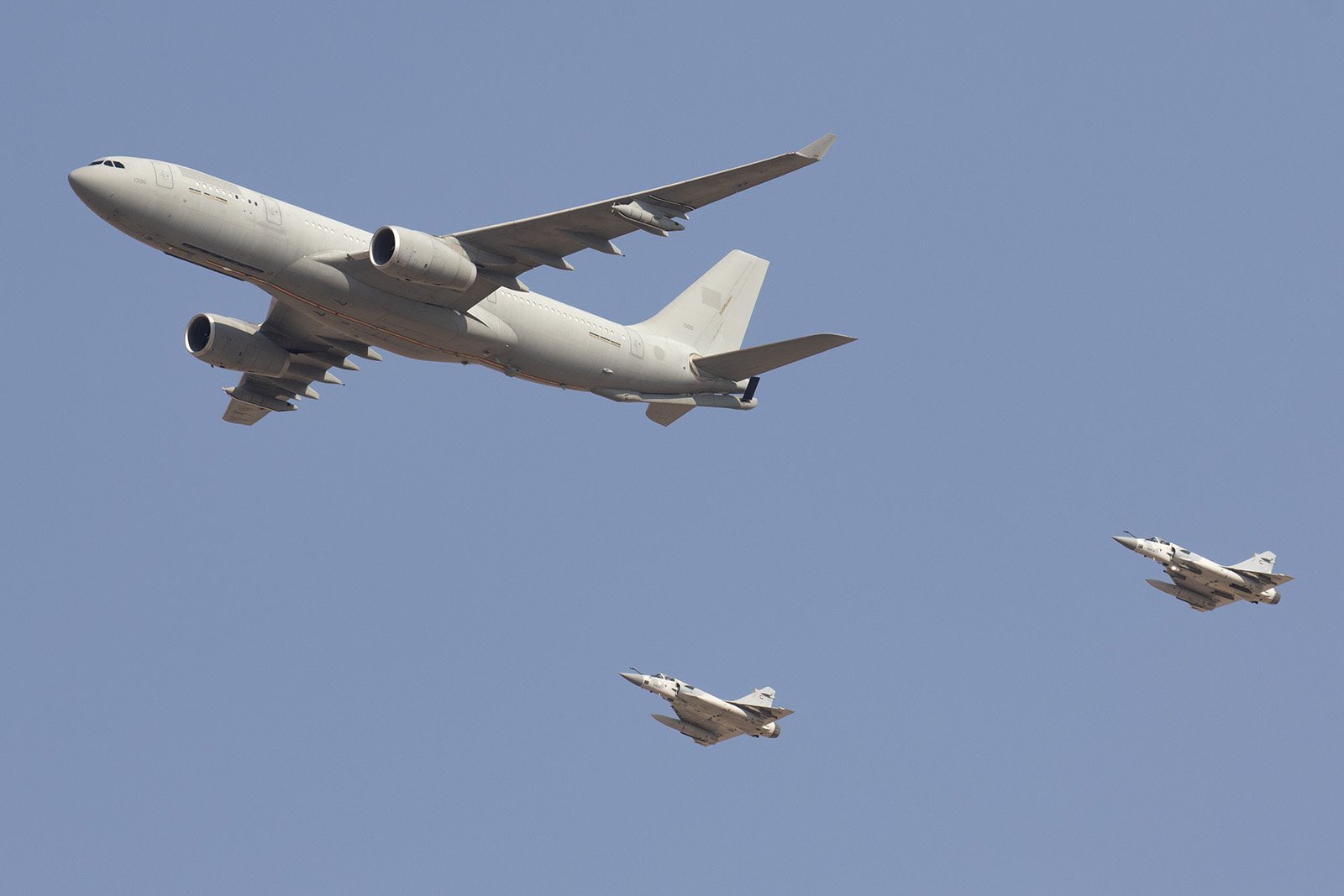
Dubai Airshow has kicked off with new contracts being anounced. UAE Air Force has signed for 2 Airbus A330 Multirole Tanker Transport (MRTT) aircraft increasing the country’s MRTT fleet up to five aircraft.

Image


The contract is thought to be 670 million $ and includes the upgrade of previously delivered aircraft. Deliveries will start in 2024.

References:

- https://twitter.com/Rotorfocus/
- https://www.airbus.com/

Monday, 1 November 2021

Interview with a former British artilleryman and veteran of the Gulf War

A former artilleryman who served in the British Army has accepted an interview for the blog. I, joined the Armed Forces at 17, serving in Germany and taking part in the Gulf War.

1. Hello I., thank you for accepting the interview. Could you give us a bit of an introduction?

At the age of 17 I joined the Royal Regt of Artillery 1988 to 1992. I first trained on the L118 105 mm light gun, after basic training I was then posted to 49 Field Regt Field Artillery in Germany Lippstadt. Here I was retrained on the M109, 155 mm SP gun Before serving in the First Gulf War I had done a united nation tour in Cyprus. In 1992 I left Royal Artillery and joined an infantry unit till 2014.

2. What would you consider are the strong and weak points of the L118 Light Gun you used?

My view from being on the M109 its strong points are its fire power and the gun is only as good as it well trained disciplined gun crew and commander. Weaknesses I’d say its aluminium armour and if the engine breaks down you are stuck in location which makes you a static target

3. What is the typical distance to target and rate of fire when you train?

As for typical distance of target it could be any as long as the target is with in our firing  range, from head on target to 21km or 30 km. We trained for all eventualities. As for rate of fire again id say 4 rounds per min again depends on your crew or if you use the automatic rammer, on my crew our loader would ram the shell with his fist along with pure aggression and adrenalin as he was a big lad. I am sure today with health and safety might not happen.

4. When it came to target designation, what was the most common approach to get the data (reconnaissance aircraft, specialised vehicles, forward artillery observers)?

Our most common target indicator was given by the FOO, forward observation officer. They could be on foot or by reconnaissance vehicle, again depends on enemy threat and their location. They would send their info by radio to our (CP) command post which the CP would relay to us by giving a fire order.

5. Did you train/prepare in any specific way before being deployed to Saudi Arabia?

We trained in Canada Alberta, before being deployed to Saudi Arabia, all British units are continuously training as not be caught off guard, hence we can  deploy at a moment notice anywhere in the world.

6. Can you comment on the Iraqi Army? Did you examine any equipment? What was your impression on it and its training?

As for the Iraqi army we were going up against the Republican guard force, we were briefed up that they were  professional soldiers, well trained better equipped and moral was high. What i saw and came across were soldiers surrendering left right and centre, some had not eaten or had water in days. So my first impressions were shit these guys were  broken soldiers and not all that cracked up to be. Their equipment was out dated and outclassed. I never saw their training so cannot comment.

7. When it came to the L118 Light Gun, what do you think were the main conclusions following war against Iraq?

Conclusions on the M109 in gulf war simple, superior fire power and fire planning, along with the support of FH70,MLRS.

8. In recent times artillery has introduced UAVs for target selection/reconnaissance. Did you ever try this concept?

As for the  UAVs I have not worked with them i have friends who still serve they tell me its a good asset as to recognise targets identify  and destroy with more accuracy.

M109 during second day of operation Desert Storm (known as Granby in the UK).

Getting ready to fire.

4th Armoured Division coat of arms.


9. What about more recent conflicts like Donbass, Syria or Nagorno-Karabakh? What was you impressions on the use of artillery in them?

The recent conflicts in Syria, Donbass etc and the use of Arty in built up areas is an over kill especially when they know there are civilians. As history has shown in the past whether  Stalingrad or Monte Casino  all you create is more places for the enemy to hide and attack  or defend once the  fire is over.

10. Do you think towed artillery is still valid (vs self propelled systems)?

I personally think towed Arty is still valid for the simple reason towed guns can be pulled by men or a horse or some sort of vehicle so the mission can have more chance of success.

11. Countries like Ukraine and Russia have reactivated 2S7 Pion 203 mm guns. A few years ago this calibre seemed obsolete when compared to advanced 152/155 mm ammunition. Now it seems that they do have a function. What is your opinion?

My opinion is simple on these guns as they have proved themselves in Afghan War from 79 to 89, then Chechen War all you have to do is upgrade them

12. Have you trained with personnel from other countries? Did you use any of their equipment (artillery)? What were your impressions (training and equipment)?

I trained by other nations but not with them, as being boots on the ground. Even though we were bigger part of the picture, we never saw the artists.

Other interviews:

- Former M60 tanker in the Army of Austria
- Former Chieftain crew member
- Former Chieftain gunner
- AMX30 commander of the Army of France
- NCO of the Army of Serbia 
- Former crew member of Challenger 2
Former Leclerc commander
T-72 driver in Czech Army  
- US Army M60 tank crewmman
- Interview with D., former US Army tanker with experience in the M60 and M1 Abrams
- Interview with Stefan Kotsch, former NVA/Bundeswehr tanker  

More interviews can be found in the Spanish version of the blog (link), including veterans of Leo 2, AMX30, M48/60 and REME.

I am always looking for more veterans, active members or people related with the defence industry to accept interviews. If you enjoyed reading the material and would be happy to accept an anonimous interview you can get in contact with me. My e-mail can be found in this link at the heading. Otherwise leave a message in the comment sections.

Tuesday, 19 October 2021

Photo gallery of Russia's S-70 Okhotnik heavy UAV

These are by far the best photos I have seen of Russia's S-70 Okhotnik heavy UAV. The author is Sergey Alexandrov.

This UAV made its first flight in October 2019. The final version will have a 2D nozzle, and will operate in mixed regiments with Su-57s. The cost of one unit together with a command post is approximately 20 million $. Deliveries are expected in 2024.


References

- https://vk.com/milinfolive

Friday, 15 October 2021

First photos of Kuwait's EF-2000

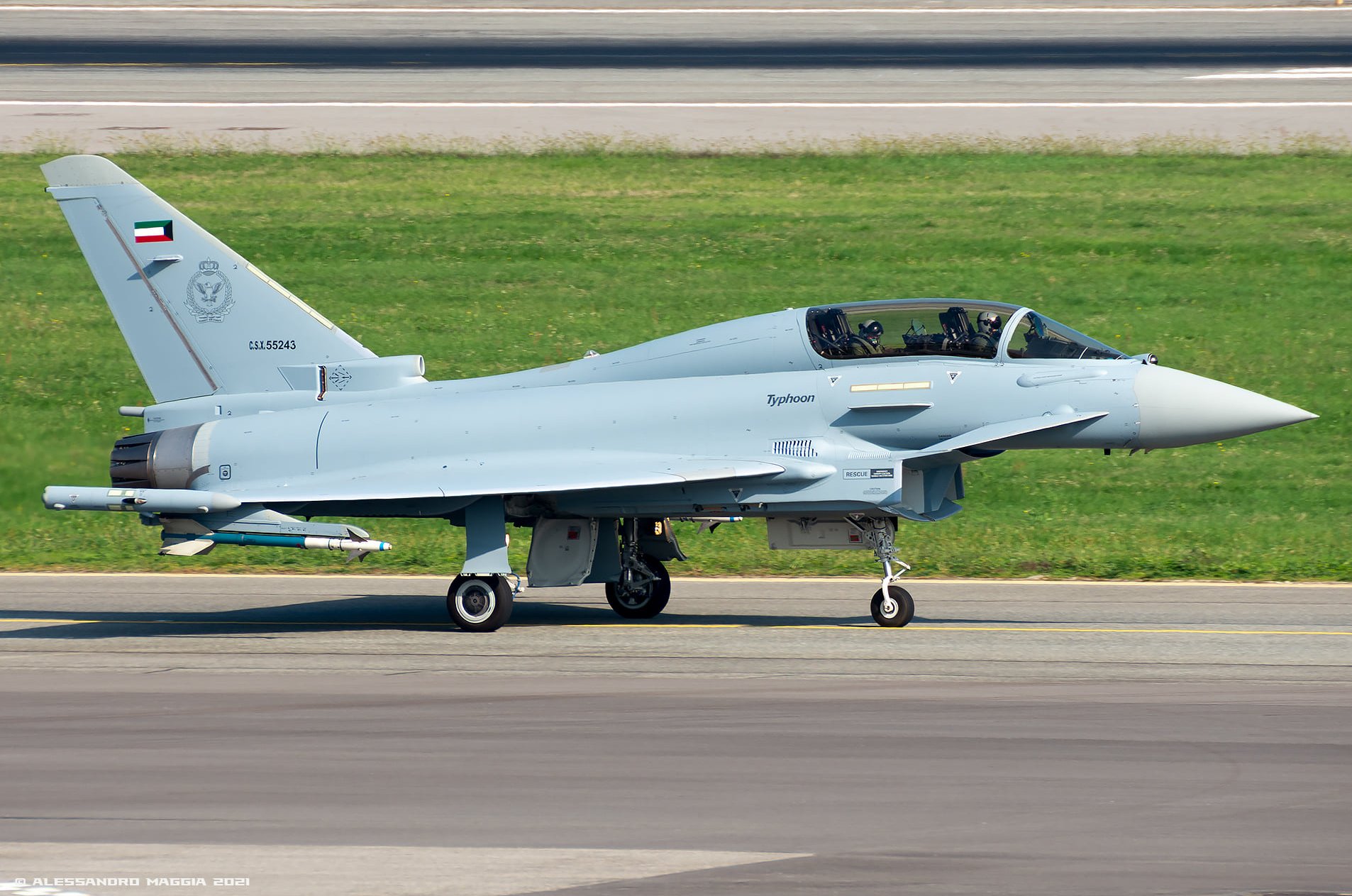
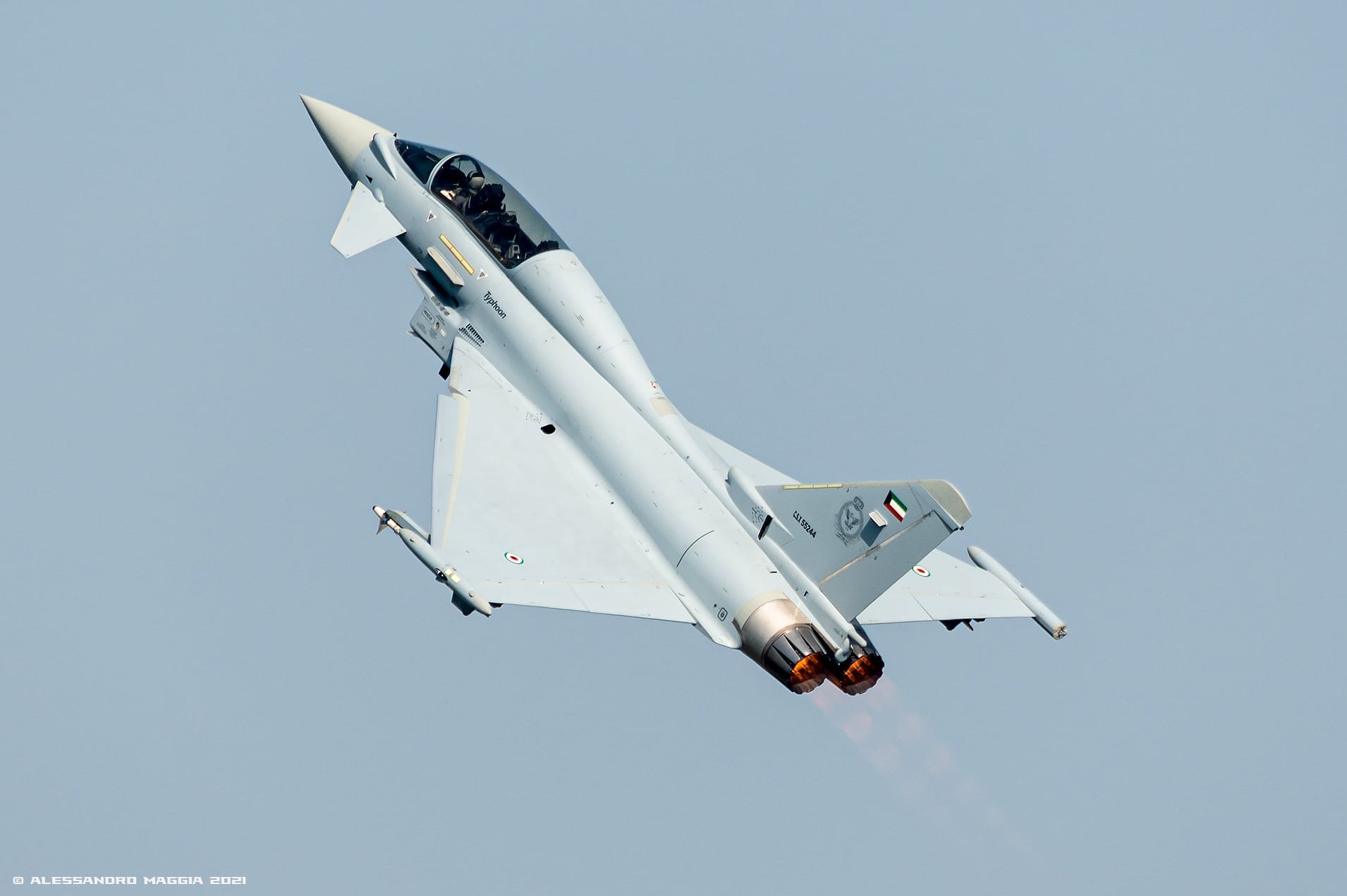
The first 2 EF-2000 built for Kuwait Air Force have been seen at Leonardo’s Caselle plant near Turin, Italy. in 2016 this country signed a contract for 28 (22 single seat and 6 twin seaters) for  €7.957 billion ($9.062 billion). The variant is considered the most advanced, being Tranche 3 and equipped with a Mk 0 AESA radar.


Eurofighter has had a bumpy road before deliveries. Kuwait's parlament decided to investigate the contract because the cost was judged to be too high, and there were delays due to radar integration and covid.

References:

- Photos by Alessandro Maggia
- https://twitter.com/CiroNappi6/

Friday, 1 October 2021

Interview with a former M60 tanker in the Army of Austria

A former M60 tanker in the Army of Austria was happy to accept an interview for my blog. L. served in M60 Patton tanks during the early part of his career. In 1991 he was deployed in the frontier with Yugoslavia as this country descended into civil war. Before starting the interview I would like to thank him for his time.

Hello L. Thanks for accepting the interview. Could you provide a brief overview of your career in the Austrian Army?


I was first crewmember (3years) Next tank commander for 10 years. Finally Platoon Leader, 14 years. And now since 11 years operation NCO or in German- Kompanietruppführer. Austrian Language – Kommandogruppenkommandant. With some mission abroad (ALBANIA 1 Mission Group Commander, KOSOVO 3 Missions- Platoon Leader, S3 NCO, Admin ORF Bat, BOSNIA 5 Missions LOT NCO Liaison Obserations Team) and of course some trainings mission in Poland, Germany, Swizerland.

All in all in the end of the year 38 years of service.

You served in a M60 Patton. What was your impression of the vehicle, and the strong/weak points?          

Was in service with a M60A3. In the first years (early 90) we are quite satisfied with the performance. Including the service in the year 1991 (protection border Yugoslavia). The last few years (until 1989- end of service of the M60 in Austria) we have some live fire test with T-72 from the DDR Army. And there we found out with our APDS we disrupt the front of the T72 first time at a distance of round 500m . So at least we are lucky as we change tank to Leopard.
 
When training, at was the typical distance to the objective and speed of the tank when you fired? And the longest distance at which you ever fired?

Distance was from 500m up to 2000m. in training. At this time we train only in Austria and the competition was only among the 3 armoured battalion’s ( PzB10- terminated 2005, PzB14, PzB33- terminated 2015 now a Infantry battalion). There are no international contact in the 80` and 90`. The longest distance we fired with a HEP (high explosive plastic) about 4000m (only a few times, the target was the dimension of a infantry platoon, for testing). Speed was for us this time also ok. Max speed of the tank was 35/40 Mph. For shooting it was 20 Mph (flat plain) 15Mph cross country ( you have to work together with the driver. Not use the breakes or to steer when you are to fire the main gun.

How was the night firing conducted? Did you use flares for battlefield illumination?
 
Only when we work together with our artillery (was very rare at this time)

At what sort of ranges could you fire with the IR projector?

Only the gunner had a low-light amplifier. And only experienced gunner could fire at a maximum distance of 1000m. And the night has to be bright (full moon, snow, fire…). We also use on regular basis floodlight ( every tank has one mounted on the maingun with IR and white light). For this we have special instruction how to use it. Normall distance about 800m in the night.

In terms of maintenance, was there any component or system that was more delicate? Were there any issues with the supply chain?

The motor was very stable. We could “repair” many little damages with crew resources. (starter unit, air filter…). The armoured tower also not so sensitive like the tanks today are. Laser was a little bit awkward to handle ( only a little number of measurement until out of order.

What was the typical ammunition configuration load (% APDS/HESH/Smoke)? Did you have specific rounds for certain targets (APFSDS for T-64/72/80)?

63 rounds for main gun 105mm, 800 rounds 12,7mm, 4000 rounds 7,62mm total load.

Main gun: 3 WP- White Phosphor  12 HEP- High Explosive Plastic, 18 HEAT – High Explosive Anti Tank (shaped charge), and in the first years 30 APDS Armor Piercing Discarding Sabot and later instead of this 30 APFSDS Armor Piercing Finn Stabilised Discarding Sabot.

Main battle tanks APFSDS.
Armored personal carrier HEAT (long distance) or HEP.
Infantry (platoon or coy) short distance MG (7,62mm/ 12,7mm) or HEP. Long distance HEP.
Unarmored vehicle also short distance MG (7,62mm/ 12,7mm) or HEP. Long distance HEP
Helicopter only if it run square to our tank APFSDS

What was the maximum distance you covered in a day during deployments or exercises? Was the mobility suitable for Austrian terrain? Did the tank cope well or needed extra maintenance?


Max distance was as I remember so round about 250 km. This mainly on regular roads. Cross country about 150 km a day. For Austrian Armed Forces it was quite OK. During time of cold war we have the system of “Raumverteidigung” (defence positions along the main routes from east to west and in Tirol from north to south). And the armored bataillon was designated for counter attack operations to destroy the enemy heavy armored forces. For the M60 it was no bigger problem. The only thing needed maintenance for the chain.

The M60 is one of the largest (and most comfortable) tanks. Do you think it was worth it (it was also a larger target)?

As we used it that was not a question for the crews. But we train as long as possible not to go in open areas ( if possible go along the forest edge) and try take up position with hull down. We had some worries about the cupola for the commander with the Cal 50 MG ( MG 85). It was only a weight of about 800 kg. and if there would be a direct hit it would flew away with the commander as we heard from the IDF.

The M19 commander cupola is one element which has not proved popular, and some operators removed it. What do you think?

As I wrote in the last question. But the Austrian Armed Forces do not want to remove the copula. So we train with it. But many of the tank commander thinking about to throw it of.

You served in an evolving era. The threat in the late 80s early 90s was a conventional conflict in Central Europe. It then moved on to fight against terrorism. How did this affect the training you did?

For tankers first hand not so much changed. But we start to train at this time to fight in build up areas.(short distance shooting, work together with infantry . protection . CRC technics, OP, Checkpoints …)

Did you practice NBC scenarios? What was the procedure?

We trained this on regular base. The M60 has a NBC filter system. But it worked only when the crew put on the NBC mask and connect it with the filter system, with e tube for every member. Because the tank was not tightly closed for gas.

Did you have the opportunity to train with other Armies? What were your impressions? Did you like/dislike any specific equipment?

Until the late 80 we do not train with other armies. Only when we are on mission abroad (Golan hights Cypern). So only peacekeeping missions and technics, we train at this time.

By the 1980s Israel had used the M60 Patton in combat. Did you get any feedback on its performance or changes applied to variants?

The information was not from the official system. We get it from articles from other countries. For instance, the problems with the cupola, effects ammo, supply….

In 1991 you were deployed for 3 weeks in the frontier with Yugoslavia. Could you share your experience? Did you get any intelligence on Yugoslav Army equipment?

The armored bataillon 14 was deployed to the border with only one coy. Most of the crew members were NCO`s and no conscripts. We put the tank commanders of one platoon in one tank together. So mostly the platoon leader was the commander and the gunner loader and driver are the three tank commanders.
The experience at this time, as I remember was very good. We are together a long time before this deployment, so we know each other and work very good together. We do each day oner “Demo Fahrt” a kind of patrol along the border. A show of force. And we have reconnoitred some hull down positions near the border for defence operations. Most of the information’s we get on normal TV program. Less information from our intelligence.

In the 1990s Austria had access to Soviet equipment like the T-72 tank. Did you have the chance to familiarise yourself with it? What was your impression?

The soviet equipment Austria bought was at first hand to test the effect of our ammo (APFSDS, HEAT..). We have the possibility to get in contact with the soviet tanks. An our impression was that the equipment was not so “technical” but very stabile when you have to use it.

The testing of the ammo with the M60 was for me very sobering. We started at 1200m target front- no disruption. Next was 1000m. Then 800m. And at least we get the first hit with an effect at about 500m.
We does this test in the middle of the 80` and from this time on the Austrian Armed Forces try to replace the M60 or to upgrade it in some ways. At least it ended with the buy of the Leopard2A4 from the Netherlands.

What is your opinion on the Israel upgrades (Magach - also sold to Turkey as M60T)?


For me it looks good. But for me it mostly depends what is the possible enemy in your region. And what are you using the tank for.Is your enemy better equipped than your own tanks.

Turkey has used M60s in Syria. What do you think of the way they are being used?
 
As I read and heared it was the same problem with the Leo`s ( the lost also some of them). Stay for long in the same position (2or more days). On modern battlefield are 5 up to 10 minute sometimes to long (artillery) No protection of mechanised infantry. And the crews are for my opinion not so well trained as the have to be.

Newer models of tanks have incorporated turbines and automatic loaders. What is your opinion of them?

May be I am old fashioned but the loader of our Leo´s can do their work in about 4/ 5 seconds. The problem of a jam is minimal with a human loader. And for me also very important, you have a forth crew member for all the work ( ammo loading, guard the tank, reparation of running gear….). I personally saw a problem with an autoloader (Leclerc) in SETEC 2017. One hatch was not 100% tight. So the autoloader say NO. and the one tank could not fire in the competition at this moment with this small problem. Would not happen with a human loader.

When it comes to turbines, I think you have some benefit ( high power with low weight) and some handicap ( Noise, high consumption of fuel, not from the first moment when you start the engine full power). So you have to be familiar with your tank and you get the best out of it.

What about the Armata concept, in which the crew is placed in the chassis?

As crew member it is quite interesting for me. In hull down position very save. Also the defensive hard and soft kill systems. Problem is if some of the electronic does not workas it should.

In the late 1990s the M60s were replaced by Leopard 2A4. Do you think it was a good decision? Could the M60s have carried on with an upgrade?

Like I say a few questions before. Depends on the possible enemy. And in the neighbourhood of Austria the equipment is “too good” for the M60 (105mm,stabilisation, speed…). At least the Leopard2A4 is to old and has to be upgraded in near future, hopefully.

Is there any anecdote you would like to share before we finish the interview?

The only thing to share is may be. All equipment is only as good as the crew is trained.

The Austrian tank crews at the SETC  (2017 1st, 2018 3rd) achieved it with the oldest version of the Leo in the competition. Only the penetrating power was not possible to test.

Other interviews:

- Interview with a former Chieftain crew member
- Interview with a former Chieftain gunner
- Interview with a former AMX30 commander of the Army of France
Interview with a NCO of the Army of Serbia
Interview with a former crew member of Challenger 2  
- Interview with a T-72 driver from the Czech Army
- Interview with a former US Army tank crewmman 
- Interview with D., former US Army tanker with experience in the M60 and M1 Abrams
- Interview with a former NVA/Bundeswehr tanker
- Interview with former Marine and writer Kenneth Estes