Saturday, 29 January 2022

Russian and Syrian Air Force conduct joint air patrols over Syria

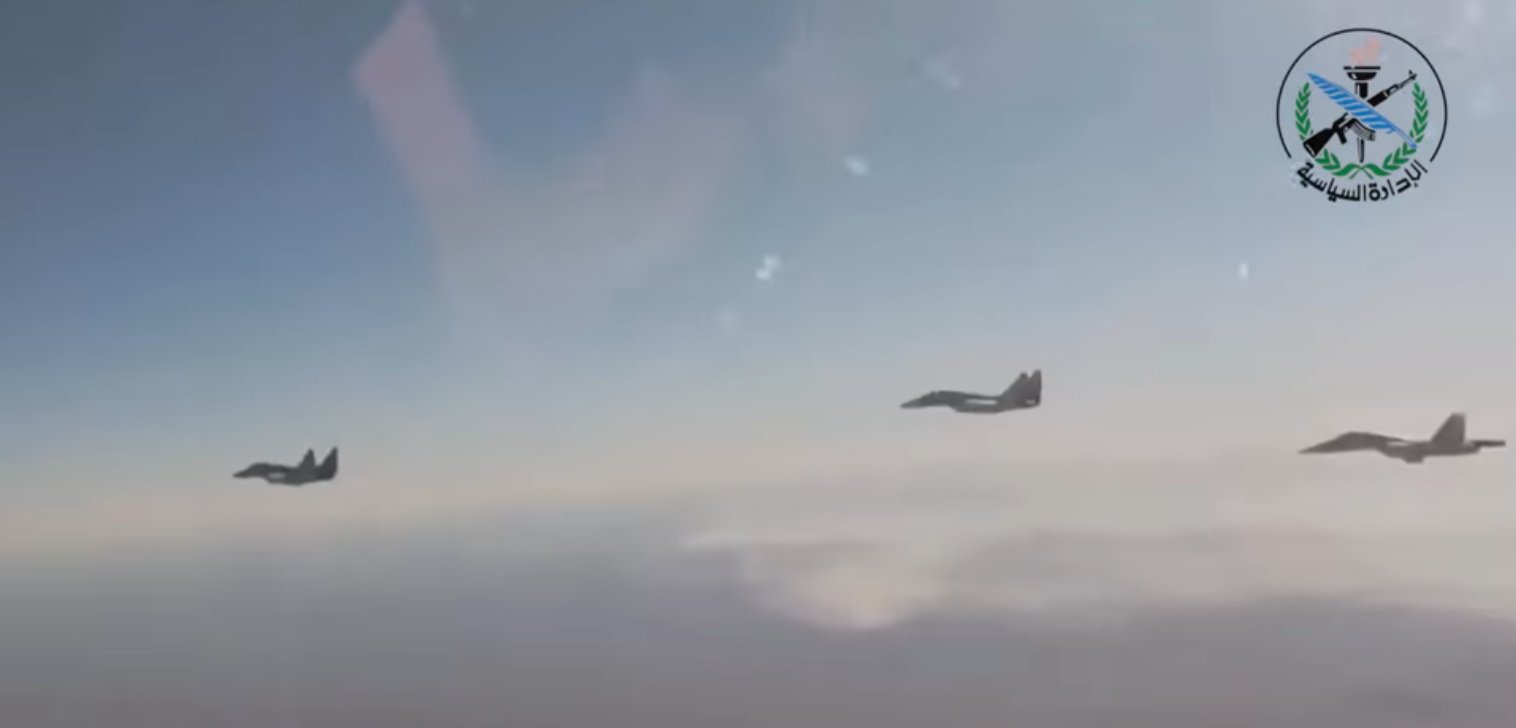
The Russian Defence Ministry has reported that the Russian Aerospace Force (VKS) and the Syrian Air Force (SyAF) conducted joint air patrols in Syria.

The aircraft took off from the bases of Hmeymim, Seykal and Dumar, flying over the Goland Heights and the southern frontier. VKS deployed Su-34, Su-35 and an A-50 AWACS aircraft, while SyAF fielded MiG-23 and MiG-29. Note that one of the Syrian Fulcrum could be a 9.13 version donated by Russia in May 2020.

Su-34 with Syrian MiG-29s (1).


MiG-29 as seen in the joint patrol and flying following donation.


Su-34 with MiG-29 sirios (2).

Su-34 with MiG-29 sirios (3).

Image
View from the SyAF (Syrian Ministry of Defense).

MiG-29SMT in T-4 base, located in Tysas


On top of that, MiG-29SMTs were seen in SyAF base T-4, located in Tiyas. This could be evidence that the aircraft have been donated, as VKS already deployed them in Syria and has no further interest in acquiring more.

References:


- https://tass.ru/armiya-i-opk/13504197
https://twitter.com/DimasqS
Entrada blog: Más MiG-29 y Su-24 para Siria (19-5-2020)

Tuesday, 25 January 2022

Interview with a former Centurion tank driver in the Army of Sweden

A former Centurion driver in the Army of Sweden kindly accepted to be interviewed for the blog. L. served with both the original and modernised variants, so he can give a full perspective of the improvements and how they affected the driving.

1. Hello L., thanks for accepting an interview for alejandro-8en.blogspot.com. Could you provide a brief overview of your experience with the Centurion tank in the Army of Sweden?

I began basic training in 1982, was chosen out to be a loader but as a couple of the guys who were chosen to be drivers had no licence for driving a car exchanges were made. The captain who was responsible for drivers education and training chose two countryside guys brought up on farms. He meant we were used to work long days, keep things going and - we could handle gearboxes without syncronised gears. Very important.

The tanks we had were strv 102. Centurion Mk 3, upgraded with L7 105 mm gun and Israeli designed commander’s hatch. The tanks which suffered main engine breakdown, which were some, were sent away to go through refit and modernisation program.

In 1986 I was called for being taught the tank version which came out from the REMO, Strv 104. Suddenly the crews had fast and reliable tanks! And - the tanks were much easier to drive and handle. The difference was huge.

2. What do you think were the strong and weak points of the Centurion tanks?

The entire design of the Centurion was like made for Swedish terrain, both open plain fields, forests and hills. A defense position in a reverse slope or behind a summit made the tank a small target difficult to see and hit. Training units equipped with battle simulation system made this very clear, also when ”fighting” against the infamous turretless S-tank. Things were a little more complicated in open fields but being on the move firing gave the Centurion gunners a good advantage against the S which had to stand still for aiming and firing.

The Centurion with the original power pack were mechanichally vulnerable. They had been in Swedish service for 29 years when I entered service, most of the tanks had been rolling for several thousands of miles. One tank we had during basic training had an meteor engine which had worked for 5000 miles… that engine was that tank’s second engine. That engine was reputed as the one in Sweden which had done most miles. It was a bit tired though.

The Merrit-Brown gearboxes could be difficult for some to learn to handle. A gearbox which had been repaired did not last far as long as a brand new gearbox.

The gun’s righting system almost never failed though.

3. As a driver, how did you find the ergonomics?

The original Centurion, a product of the 1940s was craftmanship to drive. Skills were essential and drivers had a pretty hard work. The clutch pedal needed like 40 kg to be pressed full way. It was common drivers got issues with their left knee. I’m one, slightly linking.

Strv 104 was something different. No clutch, just brake and throttle. Instead of two steering sticks there was a handlebar like on a bike. Things had become better and easier. Brakes and steering were more efficient.

One Swedish Centurion, 80392, got a new driver’s hatch for trial. It was not split like the original one. It had two large periscopes which could not be adjusted sidewise. Even though supported by springs for easy handling it was too heavy and the project was abandoned. The unprotected periscopes would have been very vulnerable in combat.

4. What was the maximum distance you covered in a day? Did the tank needed any special maintenance?

An armoured unit sometimes moved from one exercisefield to another, doing its way on tracks. We did about 100 km in one day that way. After an accident with a civilian car in the mid 80s speed was limited to 25 km/h, and the gun fixed over rear armour and driver was to have hatch open. Two men on watch in the turret.

Tracks and bolts were carefully checked before march on road longer than 30 km.

5. How did the diesel and petrol engine performance compared? Was there a difference in the response? What about the fuel consumption/range?

The Meteor had some issues. Never let it idle for more than some seconds at ~600 rpm, or the spark plugs would clog and need to be changed. 1000-1100 was fine. The engine was very light for its power, so the material was not particularily thick and therefor vulnerable. It happened an engine sounded weird and when checking the engine compartment a piston was found on the floor. Once the entire row of cylinders on one side quit working. That tank was despite that damage able to be loaded on trailer by its own power.

Strv 104 (Courtesy of S.).

The Teledyne Continental diesel was a bit more noisy with a rather rough sound.

Screws needed to be tensioned some times, they could tend to shake loose. Otherwise were these diesels very reliable and they gave much more power and speed. Some strv 104 did 55 km/h.
During exercise the Meteor needed 15-25 l/km, petrol, in terrain. The Teledyne Continental was more moderate, about 5 l diesel/km.

6. In the introduction you mentioned the integration of synchronized transmission in Strv 104. What were the main benefits (acceleration, fatigue for driver)?

Israel Defence Forces upgraded many of their Centurion tanks in the early 1970s with modern and powerful diesel engines and powershift gearboxes with torque converter. The turret was also modernised for faster and more accurate shooting. Swedish Army and South Africa Defence Forces upgraded several of their Centurions about ten years after Israel fought Yom Kippur War where the upgraded Centurions were a great part of their success.

The gearbox was a Detroit with two gears forwards and one reverse. The torque converter and the powershift eliminated the need of a conventional clutch and made the driver’s work way easier.  As less focus was on just changing gears the driver could be more focused on looking in his periscopes and that way be able to drive faster, safer and more comfortable which made the lite better for the crew.
The Detroit gearbox was not only very easy to handle, it was also extremely reliable. Strv 104 was in service for twenty years and gearbox breakdown was very, very rare. I did not witness any myself. The torque converter gave smooth power to the final gears, which were modified to turn rotation. Final gear breakdowns got rare.

The increased power and speed prompted the crews had to check tracks and bolts more often. Track segments did crack. Bolts did break too. But we were much on the move, and the crews enjoyed strv 104.

7. Living in Sweden, what were the worst wheather conditions you encountered while driving? Did you ever have problems starting engines on the morning?


Swedish weatherconditions can sometimes be a little of a challenge. An armoured unit can not wait for good weather though. Fall and winter meant fog, rain and snow. Rain pouring through the hatches, vapor, water and snow on the periscopes kept the crew busy all the time. The temperature inside the tank was not a problem even in -20 degrees Celsius. Especially the strv 104 had an excellent heater with effect enough for half a dozen of average size houses. Strv 102 once had a petrol fueld heater in the compartment left of the driver, but they were scrapped in the late 1970s because of they tended to leak out petrol and catch fire. A few drivers had been injured when that descision was taken.

Snow and ice could be both a challenge but also quite fun. The tracks tore up snow so it could be difficult seeing your way, but it was really cool drifting with the tanks!

The drivers got well trained driving on icy ground to prevent tracks to come wrong among the road wheels, or other accidents.

One accident happened one winter with much of snow and very bad road conditions. A company were to be moved from a firing range and the trucks and trailers were not able to make their way to the camp, and so the tanks were to be driven 5 km to the closest cleared and sanded main road. One gunner persuaded his driver to drive instead of him. Half a kilometer from the road where the tanks were to be loaded on trailers the tank began drifting in a downhill, in the end of the downhill is a slight curve to left and there is a steel bridge with a railway on top. The tank hit the right bridgepillar with right idler wheel. Since then strv 104 were banned for others than drivers ti drive during winter conditions…

There is still, 30 years later a curve on the pillar… and marks from the track.

Other interviews:

I am always looking for more veterans, active members or people related with the defence industry to accept interviews. If you enjoyed reading the material and would be happy to accept an anonimous interview you can get in contact with me. My e-mail can be found in this link at the heading. Otherwise leave a message in the comment sections.

- Interview with a former Centurion tanker in the Army of Denmark
- Interview with a USAF pilot who flew the F-106 Delta Dart
- Interview with an US Army M48A5/M60A1 veteran tanker
- Interview with a former British artilleryman and veteran of the Gulf War
- Former M60 tanker in the Army of Austria
- Former Chieftain crew member
- Former Chieftain gunner
- AMX30 commander of the Army of France
- NCO of the Army of Serbia 
- Former crew member of Challenger 2
Former Leclerc commander
T-72 driver in Czech Army  
- US Army M60 tank crewmman
- Interview with D., former US Army tanker with experience in the M60 and M1 Abrams
- Interview with Stefan Kotsch, former NVA/Bundeswehr tanker  
- Interview with former Marine and writer Kenneth Estes


Monday, 24 January 2022

German navy chief Schönbach resigns over comments on crisis in Ukraine

Vice Admiral Kay-Achim Schönbach, commander of the German Navy, has had to steped down following some public statements about the crisis in Ukraine. During a conference in India he stated that Crimea was lost to Ukraine, and that Vladimir Putin "probably" deserved respect. He also added that Georgia should not join NATO and that Ukraine does not meet requirements.

Vice Admiral Kay-Achim Schönbach.


Ukraine's Foreign Ministry has summoned German Ambassador Anka Feldhusen to stress "the categorical unacceptability" of Schönbach's comments. A German Defense Ministry spokesman pointed out that "The content and choice of words of the statements in no way correspond to the position of the Federal Ministry of Defense"

Schönbach has already published an apology on his Twitter account.

References:

- https://www.dw.com/
Conferencia

Sunday, 23 January 2022

Recovery of crashed British F-35B in the Mediterranean

The F-35B that crashed in the sea on 17th December in the Mediterranean last year has been recovered. The Lighting belonged to the famous "Dammbusters" 617 Squadron. It is the first accident of the type under British service. In the 6 months previous to the accident 2,000 take offs and landings had been completed from the Queen Elizabeth carrier without any issues


The accident can be seen in the link below. The likely cause was a rain cover being left on before the fighter took off.

Link


It is not known what will happen to the aircraft. Back in the 90s the Greek Air Force repaired a Mirage 2000 that crash landed in the Mediterranean sea, but depth and salinity were different. It is likely it will end up as an instructional frame.

References:


https://www.bbc.co.uk/news/uk-59323895
- https://ukdefencejournal.org.uk/carrier-f

Friday, 21 January 2022

Russian Aerospace Forces receive 2 Sukhoi Su-57 fifth generation fighter

Russian Deputy Defenсe Minister has anounced the delivery of 2 Sukhoi Su-57 fifth generation fighter in the last quarter of 2021. The batch was part of a contract signed in  defence exhibition Armiya-2019. One of the fighters has already been identified as Bort 52, being show in a promotion video release by KnAAPO, the factory where the type is built.


Su-57 (KnAAPO).


Uno de ellos ya ha sido identificado en un vídeo promocional de la fábrica KnAAPO, donde se produce. Se trata del Bort 52. El otro sería el Bort 51. Los números de serie serían 52201 (T-50S-3) y 52202 (T-50S-4). 


According to previously published plans (Appendix 2), Sukhoi was supposed to deliver 4 Su-57s, but it is likley that the covid crisis and the accident of the first serial aircraft caused delays.

References:

- https://tass.ru/armiya-i-opk/13477449
- https://bmpd.livejournal.com/4470926.html
https://bmpd.livejournal.com/4470717.html

Appendix 1: Equipment delivered in the lastquarter of 2021

Krivoruchko added details on other equipment delivered in the same period: 2 S-400 and S-350 regiments, 3 Pantsir-S divisions, 17 new aircraft, 18 overhauled aircraft, 93 new UAVs and 7 repaired ones.

Appendix 2: Su-57 delivery schedule


Wednesday, 19 January 2022

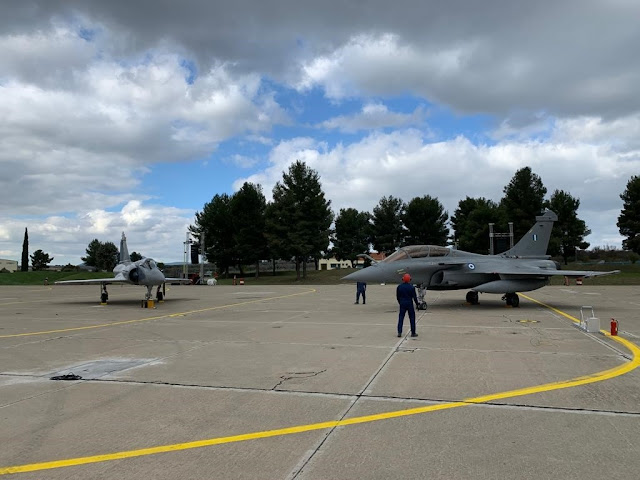
Greece receives first Rafale fighters from France

Today the first 6 Dassault Rafale F3R fighters arrived to Greece. Back in January 2021 this country bought a total of 18 together with a weapon/support package. The fleet was to combine brand new and second hand aircraft:

- New: 2 two-seat Rafale B and 4 ssingle-seat Rafale C
- Second hand: 2 two-seat Rafale B and 10 single-seat Rafale C

The contract value was approximately 1920 million €, and the weapons package 400 million €. The first 3 aircraft had already been delivered, but they remained in France to be used in training. Deliveries will last until June 2023.


30% of the payment will be carried out at the start of the contract, the other 30% 6 months later, when deliveries start. The 400 million $ weapons package will be paid in 6 years.

The fleet could grow soon, as the Greek Parliament is likely to approve the acquisition of another 6 Rafale. This contract was the first success for Dassault in Europe, and provides work for another 5 years. The French Air Force has already signed a contract to acquire the 12 aircraft sold to Greece.

References:

- https://www.reuters.com/
https://twitter.com/SafranEngines/

Tuesday, 18 January 2022

Interview with a former Centurion tanker in the Army of Denmark

A veteran Centurion tanker has accepted an interview for the blog. M. served in the Army of Denmark for 39 years, spending several as a Centurion tank commander. During his service (1972-1981) the Cold War was at full swing.

1. Hello M., thanks for accepting an interview for alejandro-8en.blogspot.com. Could you provide a brief overview of your experience with the Centurion tank in the Army of Denmark?


Originally a conscript trained as armoured infantry sergeant, as a staffseargent (on regular contract) transferred to Centurions and trained as tank commander and later officers training as tank platoon leader. Logistics officer in the tank batallion, UN guard one year in Cyprus, 6 years NBC specialist school in charge of development and procurement of NBC gear. 4 years  co of The tactical trailer Sealand, and finally 2 years as homeguard training officer Sealand. In all 39 years of service but always a Hussar. :-)

I served as a tank commander from 1972 till 1981 with a break in 1975-77 for officers training,

I have served as Regimental NBC specialist, National NBC specialist at the Danish NBC school, in such capacity i participated in a NATO meeting in Germany where the volksarmy NBC equipment was displayed and we were briefed of its use. In later years i served as intelligence officer at the tactical trailer Sealand.

2. What do you think were the strong and weak points of the Centurion tanks?

Low speed and transmission

3. Centurions kept a gasoline engine in an era when other tanks moved to diesel. What was your impression of the engine?

Superb performance, but very greedy in fuel consumption

4. The Centurion range was increased by using a trailer with 900 litters of fuel. How useful did you find this piece of equipment?

For road use and long drives it was fine, but when reversing or going over obstacles and bridges (from bridge layers) totally crap.


5. When training, at was the typical distance to the objective and speed of the tank when you fired? And the longest distance at which you ever fired?


APDS 2000m HESH 6000 normal engagement would be 800m up 200 down 400 before rangefinders were fitted. APDSFS 3000m

6. What was the maximum rate of fire (ROF) you achieved? Was there a big difference in ROF as you went through the different bins?

Initially  8 seconds between rounds, when the turret racks were empty (3+3 rounds) the “oven” beneath the gun 20 seconds per round, front rack 30-40 seconds and only with the gun at 12óclock.

7. How was the night firing conducted? Did you use flares for battlefield illumination? What was the effective distance at which you could fire?


We didn’t have night fighting equipment. Firing could be done with low precision in prepared positions with rods stuck in the ground along the sides of the tank and in front so when driving up in position the tank would be 10 cm from the side rods and front plate touching. Two dim lights were set on rods in the main firing direction, 10-15 meters apart and during daylight a series of standard firing plans would be prepared using the side indicator and levelling device on the clinometer in comparison with the range drum.

8. In terms of maintenance, was there any component or system that was more delicate? Were there any issues with the supply chain?

The auxiliary motor needed frequent oil refills and refuelling could be tricky in darkness. Track tension was difficult to adjust if the terrain was uneven or sandy. The floor had to be kept tidy and clean or else problems with the steering rods could arise due to them being blocked or jammer with dirt and trash.

9. What was the maximum distance you covered in a day during deployments or exercises? Did the tank cope well or needed extra maintenance?

70-90 km on road, extra check on tracks especially the locking rings on the pinbolts.

10. Did you struggle with the winter conditions in Denmark (starting engine in the cold, slippery terrain, going through snow)?
 

No 3 strokes with the cold start pomp in the rear left corner of the turriet was sufficient ,but the head lights on the front armour were often wrecked by ice when going through water obstacles

11. What was the maximum speed you managed to get in a Centurion? And in reverse?

20km/h on road and app. 12-15 in terrain, reverse in high you only reversed 20-30 meters, if manoeuvring, only in low reverse, so any speed Max is not applicable in reverse.

12. Did you practise NBC situations? What was the approach? How did it affect the crew performance?

NBC would demand a total lock down of the hatches if Chemical maske and personal protection had to be worn and fighting and firing would be erratic, Nuclear would be in lockdown but ABC mask would not be worn unless in dusty conditions, depending on distance to GZ and weather conditions the tanks would be decontaminated when leaving contaminated area, chemical decontamination was performer by the crew with special 5liter spray tanks containing DS2, and after 20 minutes a hash down with detergent. Decontamination soul normally be conducted at BN level in a prepared area.

13. Centurion was widely exported tank and was developed by other countries. Did you get any information on the upgrades? Was there an element (diesel engine or transmission in Israeli variants) you would have liked?


The Israeli conversions would have been nice, towards the 1990 the Danish tanks were fitted with nightfighting equipment, laser rangefinders, thermosights and starlight scopes. But in my time (1972-79) only IR/searchlight light was fitted and external storage net baskets attached to the turret.

14. At this time the NATO had a defensive approach to a possible Warsaw Pact attack. Could you comment on the tactics? Was there emphasis in firing from the flanks or hull down positions?

In Zealand only a few places could be used as landing sites, these would be defended initially in hull down positions and there after in delaying action head on. In one place cents would be liering downward onto navy vessels, (Stevns Cliffs) this was practised once every few years on towed targets.

15. Did you trained with personnel from other countries? Did you use any of their equipment? What were your impressions (training and equipment)?

In general we only trained with Danish forces using the tanks, on exercises in the countryside we used Dodge v4x4 commando, fitted with a fiberglass hull illuding the tank, cents were not allowed outside training grounds. every 2 or 3 years we did send a squadron to Germany to partake in NATO exercises. We never used other than danish equipment.


16. In this era the Soviet Union had thousands of T-55/62 and were fielding T-64. How confident did you feel of your equipment and training when it came to face this threat?

Superior both in firing and training less so in speed.

17. Have you had access to Soviet equipment now that the Cold War is finished? What were your impressions? Was there a system you liked or disliked?

In general we did not access soviet equipment, I did later on, as an nbc specialist, get the possibility as a member of the Danish team visiting Monster in Germany after the Volksarmee had been transferred to West Germany. We were surprised on some of the ideas but not with the techniques used. The T72 had a beta flash sensor that shut the tank down for a minute after detecting a nuclear explosion, but the internat warning was a blue light flashing and the crew had to wear protection. However the motor was protected with armour plates automatically closing.

18. Is there an anecdote you would like to share before finishing the interview?

My driver was asked by a British seargentmajor what made him clean and polish all brass and paint scratches to such a degree that you could have dinner of the floorboards or engine parts, He answered “My tank is my calling card” and it showed what I am made off. This was on a exercise in Germany with a British BN Chieftains, they resembled garbage cans with diesel slops inside.

Further comments

Danish NBC protection suits are made like boilersuits with laminated charcoal layers, zippers and velcro closer. They are water and chemically proof for at least24 hours (very hot) and gastight 6 hours, they were used as tankers suits when under NBC threat or attack. Crew armament was 9mm Hovea submachinegun and the commander also had a M49 Neuhausen 9mm pistol.

The tank was originally equipped with an American radio M53 or for the pl leader m47 radio, around 1994 these were replaced with the 2061 series radios.  Headlights on the Danish tanks were two captype lights mounted one over the other in the center of the front plate armour. The first Centurions were MK3 later converted to MK 5/2, The Hussarguards had 105mm guns fitted around 1970 as did the Dragoonguards the infantry regiments were equipped with 84mm guns B type, The two Equestrian regiments had 3 (later 2) tank SQN´s and 1 armoured infantry coy. The infantry regiments had 3 Infantry coy and one tank sin. The sqn were  3 pl of 4 tanks each around 1971 reducer to PL of 3 tanks and one for the sqn commander IE 10  tanks each.  Each BN had a dozer centurion (84mm gun) in the logistics SQN.

Other interviews:

- Interview with a USAF pilot who flew the F-106 Delta Dart
- Interview with an US Army M48A5/M60A1 veteran tanker
- Interview with a former British artilleryman and veteran of the Gulf War
- Former M60 tanker in the Army of Austria
- Former Chieftain crew member
- Former Chieftain gunner
- AMX30 commander of the Army of France
- NCO of the Army of Serbia 
- Former crew member of Challenger 2
Former Leclerc commander
T-72 driver in Czech Army  
- US Army M60 tank crewmman
- Interview with D., former US Army tanker with experience in the M60 and M1 Abrams
- Interview with Stefan Kotsch, former NVA/Bundeswehr tanker