Sunday, 16 January 2022

Interview with a USAF pilot who flew the F-106 Delta Dart

This month I interviewed a USAF pilot who flew the F-4 Phantom for almost 20 years. He also had the opportunity to fly the F-106 Delta Dart as a familiriasation excersice on how to fight delta wing aircraft. This interceptor is the subject of the interview.

1. Hello H., many thanks for accepting an interview for alejandro-8en.blogspot.com. What was your first impression of the F-106? What were the strong and weak points?

I thought the airplane had excellent visibility, very easy handling aircraft. I did not care that much for the instrument panel layout. It was rather awkward to operate the radar unless you were using the auto pilot. I missed my second crewmember to handle the radar while I fought the airplane. It had extremely good high-altitude performance compared to the F-4 which I have been flying. Its weapon system was optimized for use against bomber attacks. It was fairly useless against other fighters. The air conditioning worked a lot better than that in the F-4. And the auto pilot worked, which is way more than you could say for the F-4.

2. One of the features of the F-106 was its delta wing. Could you comment on its flying characteristics? Was it hard to adapt to it? What about the landings?

The Delta wing provided good lift at all altitude particularly at high altitude. However, at high angle of attack it generated huge amounts of induced drag. It was good for one turn and then you were stopped. At the same time at high altitude the F-4was not good for even one turn so I guess it was an improvement. It did not have enough power at low altitude to overcome the drag. The F-4 was much more usable under 10,000 feet.


3. The cockpit had novel features like vertical tape instruments and a “yoke” joystick. What are your views on them and how did they compare to other aircraft you flew?

Many people liked the vertical tape instruments. I was not one of them. I prefer the steam gauges. The yoke joystick was OK, I was not particularly impressed with it one way or the other.

4. The MA-1 system was notorious for its reliability issues early on. Did you experience them when you flew it?

This part was fixed before I flew it

5. The F-106A operated in conjunction with the SAGE (Semi-Automatic Ground Environment) network. How useful did you find it? Did you consider scenarios where it is jammed?


In theory it worked well, I did not really get to use it as most of my time in the airplane was spent flying against other fighter aircraft.

6. The missiles were one of the notorious issues with the F-106. Could you describe the problems?

The problem is that the missiles of the time were not reliable. This was the same problem with the F4 had. That is why the F-4E had a gun.

7. The typical load of an F-106 was 4 missiles in the internal bay. They would be fired in pairs, the ones aft being the first. AIM-4G (IR) would be placed aft because they needed to be fired first.  Was there a particular reason for not being able to fire them one by one?

You could fire them one at a time. The doctrine called for flying firing to because of the low probability of kill.

8. In 1961 the Defence Department organised an exercise (Project High Speed) to compare the F-106 and F-4H? The latter proved superior in most of the fields. What are your views on this exercise?

The F-106 was a very good high altitude interceptor. The F4 was acceptable at everything.

9. F-106 could take off in as little as 2 minutes. Was there an emergency mode for the navigation when taking off in such a short interval?

You could get an airborne alignment, it would not give you as much accuracy as a full alignment however you were pretty much always in contact with GCI.

10. When performing a mission, did you fly all the time in supersonic or in “dashes” while keeping a subsonic cruise speed?

You would only go supersonic when you had to. Fuel consumption was very high.

11. What defensive tactics were expected from Soviet bombers (Jamming, high speed dashes…)? Did you consider scenarios where they were escorted?

The Russians were never going to be escorted. It was theoretically possible over the Atlantic, but they never were. There really was not much they could do for defensive tactics other than jamming and flares. Which is a good thing because we had very little capability to deal with it.

12. In the 1960s some airforces started to look at low altitude bombing (RAF with Vulcans). Was this also included in the training?

Yes, we looked at low altitude intercepts. On the West Coast of the United States the bombers would have to drop down for the last leg because otherwise their fuel consumption would be too high.

13. Convair tried to export the F-106 to different countries without success. What is your opinion on this lack of sales (factors as cost, complexity)? Do you think the F-106 could have been improved in some ways to make it more attractive to foreign customers?


The F-106 was an outstanding high-altitude interceptor. But it was a one trick pony. Unless you needed a full-time high altitude interceptor nobody would buy it.

14. What was the maximum speed you managed to reach? Was there a limiting factor (aircraft temperature, engine)?

I never attempted a mach run in the aircraft. I did hit 1.5 mach several times while fighting.

15. What was your most challenging sortie? And the most memorable one (if not the same!)?

The most challenging thing was trying to beat an F-4 at low altitude. At high altitude it was easy.

16. Is there any anecdote you would like to share before finishing the interview?

Not really. I had a very good time flying the F-106. I did it as a familiarization thing to help understand how to fight Delta wing aircraft. It was interesting and enjoyable. It was very nice vacation.

Other interviews:

- Interview with an US Army M48A5/M60A1 veteran tanker
- Interview with a former British artilleryman and veteran of the Gulf War
- Former M60 tanker in the Army of Austria
- Former Chieftain crew member
- Former Chieftain gunner
- AMX30 commander of the Army of France
- NCO of the Army of Serbia 
- Former crew member of Challenger 2
- Former Leclerc commander
- T-72 driver in Czech Army  
- US Army M60 tank crewmman
- Interview with D., former US Army tanker with experience in the M60 and M1 Abrams
- Interview with Stefan Kotsch, former NVA/Bundeswehr tanker  

More interviews can be found in the Spanish version of the blog (link), including with veterans of Leo 2, AMX30, M48/60 and REME.

I am always looking for more veterans, active members or people related with the defence industry to accept interviews. If you enjoyed reading the material and would be happy to accept an anonimous interview you can get in contact with me. My e-mail can be found in this link at the heading. Otherwise leave a message in the comment sections.

Saturday, 15 January 2022

Finland selects the Lockheed Martin F-35A Lightning II as it's next multi-role fighter (12/2021)

Last December the Government of Finland authorised the Finnish Defence Forces Logistics Command to acquire Lockheed Martin F-35A Lightning II in order to replace the F/A-18 Hornet.

The Lightning II was the clear winner in the evaluation carried out by the Ministry of Defence. The other 2 candidates were the F/A-18 super Hornet and Gripen E/F. Rafale and EF-2000 were not selected because they could not meet the cost requirements (64 aircraft for the established budget). F-35 was first with a score of 4.5 points; Super Hornet second with 3.8.

Now some excerpts from the Finnish Air Force statement:

In the HX Fighter Programme evaluation of the tenderers’ offers, the F-35 fulfilled the security of supply, industrial participation and affordability requirements of the decision-making areas. In the military capability assessment, the F-35 comprehensive system was the best. The F-35 combat, reconnaissance and survival capabilities were the best suited of the HX candidates.

The F-35 operating and sustainment costs fit the allocated cost frame, and the aircraft development during the life cycle will be feasible with the normal resources of the Finnish Defence Forces. Within the procurement process, several essential security of supply requirements and significant industrial participation have been agreed upon. The essential security of supply requirements relate specifically to independent ability to operate in exceptional circumstances.

The F-35 programme is multinational and its user community large. The system is in service in many European nations including Norway and Denmark.

Security of Supply

The F-35 solution fulfils the national security of supply requirements of Finland. The sustainment of the system is based on the F-35 global sustainment solution tailored to meet the domestic security of supply requirements. The critical maintenance capacity will be created in the Defence Forces and domestic industrial organisations. The solution encompasses the maintenance capabilities to be built in Finland as well as spare components and replaceable assemblies for exceptional circumstances that are under the sole national control of Finland as well as participation in the multinational maintenance network.

Affordability

The F-35 solution fitted to the allocated funding frame was the most cost-effective. The F-35 had the lowest procurement cost when considering all aspects of the offer. The operating and sustainment costs of the system will fall below the 254 million euro yearly budget.  F-35 operations and lifespan development will be feasible with the Defence Forces’ resources.
No offer was significantly less expensive than others in operating and sustainment costs.

Industrial Participation

The F-35 industrial participation offer met the requirements in quality and content. The main focus of the offered industrial participation is in direct industrial cooperation that will create significant independent maintenance capabilities. The industrial participation solution will develop credible knowhow in the domestic industry from the security of supply perspective and become significant in the national economy.

The key industrial participation projects include large-scale production of the F-35 front fuselage in Finland also for other users, production of structural components as well as equipment testing and maintenance capability. In addition, Finland has been offered an engine final assembly project for the Air Force aircraft.

The industrial participation’s domestic employment impact will be 4500 and indirect impact 1500 person-workyears.

Military Capability


The F-35 system’s capability was best suited for the Finnish operating environment and HX requirements. The comprehensive system and aircraft’s capabilities in combat, reconnaissance and survival are unsurpassed. The F-35 came first in the assessment or shared the top score in all mission areas and achieved the highest total score. The proposed F-35 package will meet the defined tasks with sufficient efficacy in respect to the requirements of the future operating environment.  The quantity of aircraft and weaponry included in the quotation had an impact in the result. The Finnish F-35 fleet can achieve operational capability within the scheduled timeframe.  

The F-35 solution will produce a significant addition to the entire defence system and enhance preventive capability of defence. The F-35A is capable of initiating action in counter-air operations as well as generating and sharing the necessary situational awareness and target data, enabling the F-35 to best support land and maritime operations. The F-35 multi-domain effectiveness across air, land and sea received the highest rating in the assessment.  The stealth and other unique features, such as sensors and networks, support the F-35’s survival in combat. The F-35 multi-role fighter has the highest internal fuel capacity and all sensors incorporated negating the need for an external targeting system or fuel tank.

The F-35 system’s technological solution is sustainable and its future growth potential the best of the offered solutions. The development has been guaranteed for the entire life cycle until the 2060s.

Procurement Package

The procurement object is 64 F-35A multi-role fighters in the newest Block 4 configuration. The procurement encompasses multi-role fighter weaponry. The offered F-35 package includes the following weapon types: AMRAAM, Sidewinder, SDB I and II, JDAM-family weaponry, JSM and JASSM-ER. The weaponry is to be procured within the programme funding availability by the end of the year 2035. The weapons package will be optimised during the procurement process, taking into account availability of the newest weapon types and changes in the operating environment. With optimised weapons procurement, the system’s capability will be maximised in the Finnish operating environment and the F-35 system’s life-cycle guaranteed for the longest feasible time.

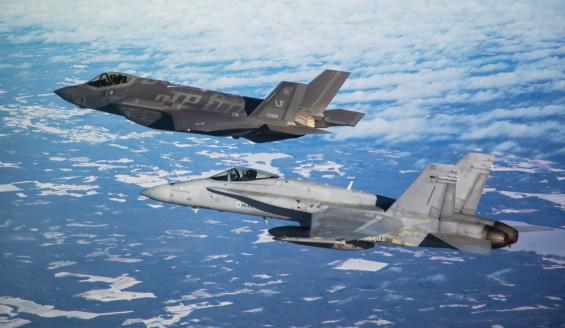
The Lockheed Martin F-35A Lightning II and F/A-18 Hornet flying side by side and there is blue sky and light white clouds on background


A remarkable number of additional products and services to be acquired concurrently are related to the procurement of the fighter system and its use. These comprise the sustainment system including test equipment, tools, replaceable assembly and spare part services, as well as information systems, training systems and services, mission support systems and related services as well as the US Government Foreign Military Sales (FMS) procurement process related administrative services to be used. The procurement package also includes the fleet sustainment costs for the years 2025-2030.

Procurement Funding

The funding for the HX programme totals 10 billion euros. The Parliament has granted the fighter programme a procurement authorisation of 9.4 billion euro for the acquisition of the Hornet replacement system and 579 million euros of a five-year transferable allocation. The transferable allocation is to ensure that the procured entity will be obtained into service as part of the Finnish defence system. Twenty-one million euros have thus far been spent in prepar-ing for the procurement.

Procurement Costs
The acquisition equals approximately 8.378 billion euros. The cost of multi-role fighters is 4.703 billion euros and air-to-air missiles AMRAAM and Sidewinder 754,6 million euros. Service equipment, spare and exchange parts, training and sustainment solutions, other related systems as well as sustainment and maintenance services until the end of 2030 cost 2,920 billion euros.

Operational facilities, aircraft hangars and storages as well as runway structures and infrastructure for the procured system will be constructed in Finland.  This is based on national and international safety and security requirements. Construction costs, costs of industrial participation, personnel costs and other project costs amount to 777 million euros.

Additionally 823,8 million euros is reserved for the final optimised weapons package and to control future contract amendments. Part of the weaponry will be obtained at a later date as per the aircraft delivery schedule.

References:


- https://ilmavoimat.fi/en

Wednesday, 12 January 2022

First flight of the Tu-160M strategic bomber

Today the first newly manufactured Tu-160M made its first flight from the airfield at Kazan Aviation Factory (KAPO). The flight took place at an altitude of 600 meters and lasted about 30 minutes.

The decision on reactivating Tu-160 production was taken back in 2015. Up to that point KAPO had only completed a few unfinished frames built in Soviet times, and the project was a huge undertaking. It was necessary to digitalize tooling/documentation, restore the vacuum welding technology for titanium and create a supply chain.


According to the managing director of Tupolev, Vadim Korolev, 40% of equipment in KAPO was upgraded.

In 2018 the Russian Defense Ministry signed a contract for 10 aircraft, with deliveries until 2027. The cost was 160,000 million rubles (2,844 million $), which is about 284 million $ for each Tu-160M. It remains to be seen if the covid crisis affects deliveries.

The total cost of the project, 50 aircraft, is 900,000 million rubles ($16,000 million $, of which 37,000 (657 million $) will be invested in KAPO.

References:

- https://www.uacrussia.ru/ru/p

Friday, 3 December 2021

United Arab Emirates signs record contract for 80 Rafale fighters

French manufacturer Dassault signed today the biggest contract in its history, 80 Rafale fighters in the F4 variant with United Arab Emirates (UAE). Deliveries will take place between 2027 and 2031.

The total cost will be 16 billion €:

- 14 billion for the fighters
- 2 billion for an armament package that includes MICA NG and cruise missiles Black Saheen, a local variant of the MBDA SCALP

UAE becomes the sixth foreign operator after Egypt (54), Qatar (24), India (36), Greece (18) and Croatia (12). With this contract, the production line is guaranteed for years, and France will have more flexibility when ordering the next tranches. To put the 16 billion € into context, the cost of the Rafale program from 1989 to 2018 was 28.438 billion €, including operations and maintenance.

Rafale (Dassault).

Statement by Dasssault.


The F4 variant is currently being developed, and incorporates improvement in the AESA radar and SPECTRA system. It has also received a Scorpion helmet, better communications and new weapons.

References:

- https://www.dassault-aviation.com/en/
- http://www.opex360.com/
- https://www.lefigaro.fr/economie
- https://www.latribune.fr/entreprises-finance

Thursday, 18 November 2021

Indonesia acquires two transport aircraft Airbus A400Ms

Airbus has anounced the sale of 2 A400Ms to Indonesia with an option for for 4 more; below is the official press release from the company:

Dubai, 18 November 2021 – The Indonesia Ministry of Defence has placed an order for two Airbus A400M aircraft in multirole tanker and transport configuration.

The contract, which will become effective in 2022, will bring the total number of A400M operators to ten nations. The agreement includes a complete maintenance and training support package. A Letter of Intent was also signed for the future acquisition of four additional A400M aircraft.

...

“The A400M is a truly multi-role platform and will greatly enhance the Indonesian Air Force’s tactical air-to-air capabilities. This aircraft will play a key role in other key missions including paratrooping and heavy cargo transportation. We are also looking at additional A400M acquisition in the near term, with future A400M developments such as firefighting an important capability we are exploring jointly with Airbus. The A400M will become a national asset and the cornerstone for Human Assistance and Disaster Response missions, beyond its tactical and air-to-air capabilities,” said Prabowo Subianto, Minister of Defence of the Republic of Indonesia.

Indonesian A400M concept (Airbus).


Indonesia had been negotiating the acquisition at least since 2016. In the last update it was stated that the Ministry of Defence wanted to have more autonomy on CN235 production as an offset.

References:

- https://www.airbus.com

Tuesday, 16 November 2021

Interview with an US Army M48A5/M60A1 veteran tanker

A few days ago an US Army veteran kindly accepted an invitation for an interview. B. served in M48A5 and M60A1 tanks in the late 1970s and early 1980s, and deployed in Europe as part of a REFORGER exercise. Before the interview starts I would like to thank him for his time.

1. Hello B., many thanks for accepting an interview for alejandro-8.blogspot.com. Could you provide us an overview of your career in the US Army?

I received a commission as a Second Lieutenant from ROTC University of Puerto Rico in June 1976.  I attended Armor Officer Basic Course at Fort Knox, Kentucky and continued on to serve in two different tank battalions, plus in various other units and staff and retired in 2003.  

2. What do you think were the strong and weak points of the Patton tanks you used (M48A5 and M60A1)?  

At the time I served on the M48A5 and the M60A1 I thought they were comfortable and roomy inside.  I thought compared to the Soviet design we had the better tank.  The M48A5 was a little smaller.  We called the M48 “Patton” tank and the M60A1 was just an “M60” and we did not consider it a Patton. 

1) A Company, 3rd Battalion, 77th Armor in formation at Fort Polk, Louisiana 1980.


The weak point was that they were taller and a bigger target than the Soviet models, but then we could go into hull defilade easier than the shorter enemy tank.  Also they were not that fast getting up to 30 mph on a road.  They were heavily armoured and could not make the speed of the newer M-1 that replaced them.  

3. When training, at was the typical distance to the objective and speed of the tank when you fired? And the longest distance at which you ever fired?


The Army installation I trained were large and during war games we had large maneuver areas.  I remember Fort Polk driving in long convoys to get to the field location, perhaps 50 miles or more along dusty tank trails.  At Fort Drum it was about the same in snow and ice sometimes.  We could not go that fast the best we could do was 30 mph.  Firing was only during gunnery and I don’t remember the ranges we fired but I know the main gun can fire out to about 4 kilometers.  If I remember right the 105mm gun could shoot even further.   

4. How was the firing at night conducted? Did you use flares for battlefield illumination? IR projector? What was the effective distance at which you could fire?  

Night time gunnery was a challenge.  We did use flares but also we had infa red and searchlights. A searchlight tank would illuminate the target for a second, we would fire and the searchlight would turn off.  Then another tank on the line with a searchlight would illuminate the target for a second, we would engage and the light would turn off. Again I don’t remember the range that we fired at.  I do remember one night fire at the range where I hit the target and it exploded. It appeared someone had put some fuel in the hulk and it exploded.  
 
5. What was the typical ammunition configuration load (% APDS/AP/HEAT)?  We carried APDS (Sabot), Heat, and HEP but only target practice rounds.  

I don’t remember the configuration but then that would depend on what the command determined for the battle we were entering and expected targets.  Supposedly there was a “Beehive” round full of flechettes that would tear apart massed infantry, but we never fired one.  There also was a Willie Pete (WP) smoke round, which we did not have the opportunity to fire.  The machine guns were the M-85 50 caliber for the tank commander on the M-60A1 and the 7.62 machine gun for the coax (next to the main gun).  The M-48A5 had a 7.62, M-60D machine gun mounted on an Israeli-designed “Urdan” cupola, which was much lower but you had to hang out of the hatch to fire, but you could traverse it 360 degrees.  The Loader also had an M-60D machine gun plus there was the coax 7.62 machine gun.     

6. What was the maximum rate of fire you achieved? How did it change as you went through the different bins?  

We were expected to have another round loaded in about 8 seconds.  Some loaders were even faster.  We never had a competition for speed and I took no note of it and was focused in qualifying my tank crew, meeting the standard, and hitting the targets.  When I took my turn as loader during my basic training it was hard to load that heavy round, about 40 pounds and I had a healthy respect for a good loader.  

7. Did you prepare for any NBC scenarios? How did it affect crews performance?
 

We trained in NBC gear but it was extremely uncomfortable and I don’t remember being required to shoot and hit targets with all that gear on.  The protective gear automatically reduced everyone’s performance.  It made you overheat and wearing it in summer was out of the question.  The mask we wore was hooked up to the tank ventilation system and it gave you a gentle breeze on your face when turned on making it more bearable.  It was hard to use sites with the mask on.

8. You served during the Cold War, and the US Army played a critical role in NATO. Did you train with crews from other countries? What were your impressions on training/equipment? Did you notice any difference in comparison to US Army?  

Never had the opportunity to serve with crews from other countries.

9. The Patton family of tanks is considered an ideal tank for conscripts because of its reliability and ease of use. Would you agree with the statement? How long do you think it took to train a crew?
 

I agree. The tank was reliable and easy to use with training and good maintenance. The problem was depending on the priority of the unit you were assigned to, you did not always get the parts you needed quickly. With poor maintenance you had breakdowns, you had to follow the schedule for maintenance. Training a good crew would take a few months of intensive training.

2) With my M-48A5 at Fort Drum, NY 1980.  We had to warm up the engines regularly to stop them from freezing up.


Our problem was as soon as we had a good crew trained, someone was transferred to another unit or left the Army. We were CONSTANTLY training our crews and rarely reached peak performance because of personnel turnover. I complained about this serious issue but nothing could be done about it at the time.  We called it personnel “turbulence” and the problem was NEVER solved. I hope they figured out a way to keep crews together better by now.  

10. Did you ever participate in REFORGER exercises? If so, can you comment on them?
 

Yes I was on REFORGER 1978. It was great training and I think back about it with fondness although it was a lot of hard work and I suffered greatly from the cold living in field conditions in a tent.  My unit deployed from Fort Polk, Louisiana to Ramstein Germany then picked up our equipment at Pirmasens, Germany and went into war games west of the Fulda area and finished with gunnery at Wildflecken, Germany.  We did an enormous amount of maneuver damage with our tanks and big trucks on the roads, ground, forest, and some buildings. The Germans made a fortune in payments for all the damage we did.  

11. What was the maximum distance you covered in a day? Did the tank need any special maintenance after?  I don’t remember exactly but I think the maximum was about 100 miles.  

We had to refuel every evening.  We had to make operator maintenance checks constantly, such as during a stop checking the track and at the end of the day. You kept an eye on the gages for any unusual readings and you checked your dipsticks of oil and transmission fluid.  The maintenance schedule of the tank operator manual gave specific instructions of what to check and when to lubricate various components on the tank.

12. Did you find operating the M48/60 in high/low temperatures challenging?
 
Yes. We trained at Fort Drum, New York during the winter and that is when I served on the M-48A5. The temperature dipped below zero and the wind chill was minus 50 below.  We had to regularly crank up the engine every few hours or the engine would freeze up and not start at all. We had to wear gloves all the time on the tank or your skin would freeze to the tank. We could NOT shut the hatches with the heater on and had to keep them open. Closing the hatch results in carbon monoxide poisoning and death. During breaks while moving around we would knock the ice off the track and road wheels.

My moustache constantly froze with icicles so I would duck inside the turret break them off warm up for a few seconds than pop back up to resume my duties. On icy tank trails you had to be careful and maintain 100 meter distance between tanks. Once my tank slid back on an icy hill, but since we maintained our distance, I did not crash into the tank behind me. I tried again and the same thing happened. Half way up the hill the tracks could not grip and we slide down the hill again.

I told the driver to get off the trail and drive through the fresh snow next to the trail. This worked and the rest of my platoon followed my example.  You had to be careful driving cross country and keep an eye out for frozen streams.  I could tell by the look of the terrain and the trees on the edge.  We had one Lieutenant sink his tank up the turret in ice water and sinking into a frozen stream.  We joked and called him Admiral after that.  It took several recover vehicles, M-88s, to pull that tank out and the engine was totally destroyed by the ice water.  Fortunately, no one was hurt.

3) I am driving the M-60A1.


Forgot to answer your question on operating the M60A1 in high temperature.  You had to wear your leather gloves or burn your hand on the tank.  It was miserable and you sweat alot.  We trained at night to avoid the daytime heat but it did not work.  At night it was still hot plus I could not sleep much in the day.  After four days we were totally exhausted.  Hope this answers your question.  I do not know how long I could have continued in those heat conditions beyond four days, when the commander brought us back into garrison to rest.  No air conditioner in the tank.

13. Did you experience any reliability issues with the M60 diesel engine? 

No. We had good mechanics. It all depends on budgets and priority of the unit.  US Army units in Europe had the highest priority and got the best and fastest of everything.  Back in the states we did not have high priority and budgets so sometimes it took longer for repair and maintenance. The Marines always seem to have low budgets and older equipment than we did.

14. In the 70/80s Warsaw Pact had deployed a very large number of tanks in Eastern Europe. Did you have access to intelligence (periodicals, reports, actual equipment via Israel)?

We had training on Soviet doctrine and tactics.  We knew they had a lot of tanks but that ours were better.  We had some intelligence briefings and manuals of how to fight them.  It was all theory and thank God we never had to actually fight them because I don’t know if I would have survived it.  Did not have any opportunity to actually see Soviet equipment, just pictures.

15. Did the Soviet Army have any equipment that caught you eye (T-64/72/80, AT missiles?)

I had no concern with their tanks except they had masses of them.  We were very concerned with the Soviet “Sagger” Anti-tank missile and the “Hind” attack helicopter.  

16. Patton class tanks served for a very long time. One of the reasons was that projects like MBT-70 were canceled. Did you get the impression the M60 was getting long in the tooth as USSR T-64/72/80?  

My last assignment with tanks was in 1980, so not enough time had gone by, but the M60 was constantly being upgraded and with a good crew could hold its own against the Soviet tanks.  The Kuwait war, “Operation Desert Storm” 1991 was an example where the Marines used M-60s and still annihilated the Iraqi Soviet tanks.  The key was training, good tactics, leadership and good maintenance.

4) In the tank commander position of my M-48A5 tank at Fort Drum, New York 1980.


17. Recently designed tanks in Europe and Asia have included autoloaders. What is your opinion on these devices?  

Don’t trust autoloaders since our human loaders could reload faster than the auto loaders during my time in tanks.  It is a machine and it can break down and unless there is a backup, you have to abandon the tank if the autoloader fails.

18. In the 1990s the Patton family was quickly retired from the US Army following the end of the Cold War. Do you think it was a good decision or perhaps they could have served longer?  

The M-1 tank is so much more superior to the Patton tank, I can understand why we completely replaced them.  In particular the armor of the M-1 is almost impregnable.  The M-1 is also faster.  I have seen Turkish M-60 tanks blown up easily by the new anti tank missiles.  The armor of the M-60 is obsolete and hanging reactive armor on the original design just added more weight and reduces performance.  The M-60 is still serving overseas in some Armies but if I had to go into combat I want the best tank possible to survive.    

19. Is there any anecdote you would like to share before we finish the interview?

I want to share one funny searchlight story, which you can add.  We were in a war game at night and my tank platoon was suppose to be attacked by an infantry company.  We had no night vision devices back then.  My platoon sergeant requested permission to use the search light.  I gave permission but told him to not tell anyone.  He shot out a beam for a second illuminating the valley ahead of us.  You could see the entire infantry company with their arms held over their eyes.  In that second the entire infantry company was blinded.  There were angry voices on the radio demanding to know who did that.  I kept my mouth shut.  The commander was furious.  The umpires had to cancel the battle that night and we had a good nights sleep :-D

Other interviews:

- Interview with a former British artilleryman and veteran of the Gulf War
- Former M60 tanker in the Army of Austria
- Former Chieftain crew member
- Former Chieftain gunner
- AMX30 commander of the Army of France
- NCO of the Army of Serbia 
- Former crew member of Challenger 2
- Former Leclerc commander
- T-72 driver in Czech Army  
- US Army M60 tank crewmman
- Interview with D., former US Army tanker with experience in the M60 and M1 Abrams
- Interview with Stefan Kotsch, former NVA/Bundeswehr tanker  

More interviews can be found in the Spanish version of the blog (link), including with veterans of Leo 2, AMX30, M48/60 and REME.

I am always looking for more veterans, active members or people related with the defence industry to accept interviews. If you enjoyed reading the material and would be happy to accept an anonimous interview you can get in contact with me. My e-mail can be found in this link at the heading. Otherwise leave a message in the comment sections.

Sunday, 14 November 2021

United Arab Emirated acquires 2 more A330MRTT

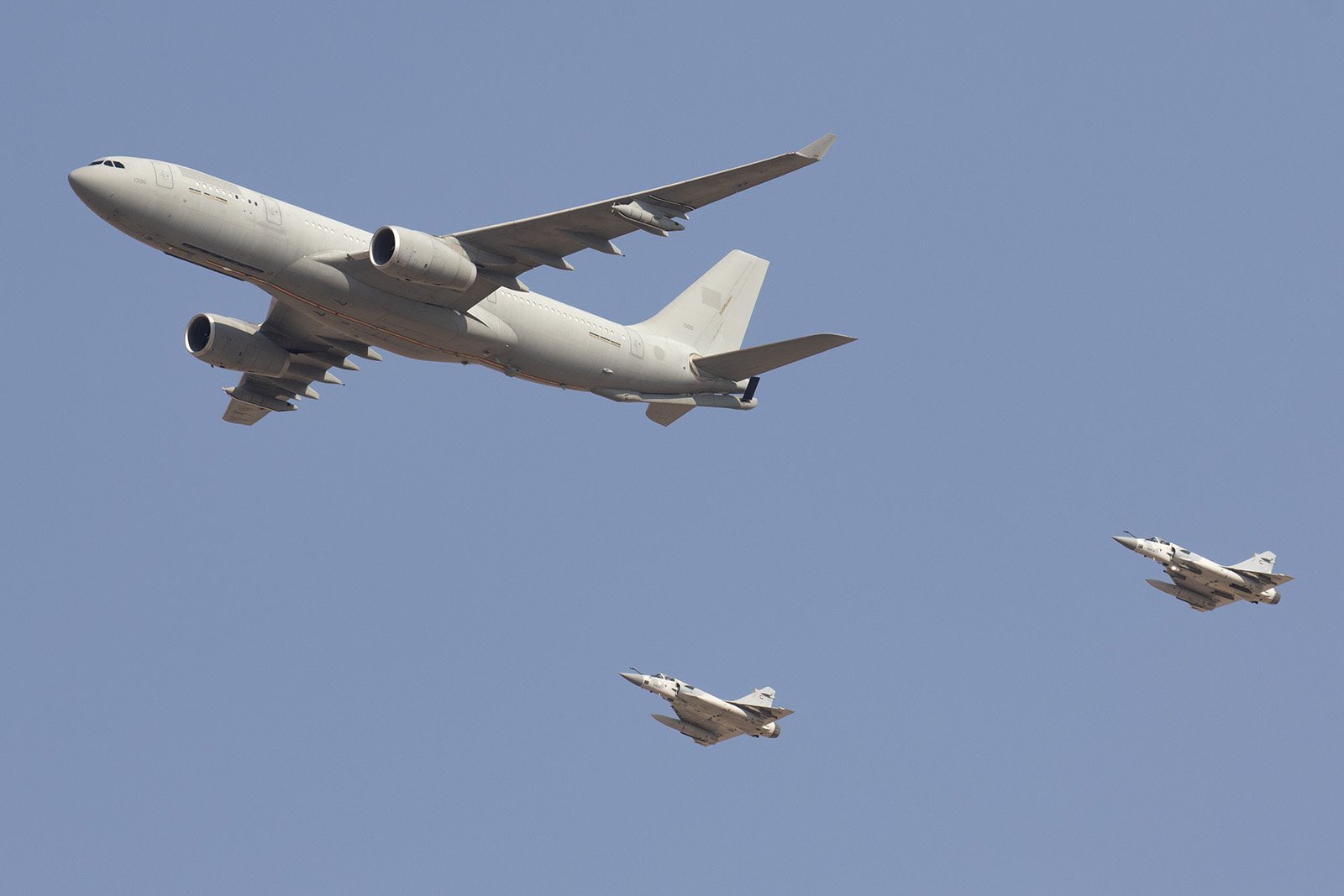
Dubai Airshow has kicked off with new contracts being anounced. UAE Air Force has signed for 2 Airbus A330 Multirole Tanker Transport (MRTT) aircraft increasing the country’s MRTT fleet up to five aircraft.

Image


The contract is thought to be 670 million $ and includes the upgrade of previously delivered aircraft. Deliveries will start in 2024.

References:

- https://twitter.com/Rotorfocus/
- https://www.airbus.com/